
Soft-washing, paired with gentle manual removal of dead growth, is the safest and most effective way to clear moss from most shingle roofs. Pressure washing is not: it strips protective granules, cuts shingle life, and can void the warranty on major shingle brands. Cost tells you which route to take.
- DIY materials: roughly £30–£80 for chemical treatment and basic kit on an average roof
- Professional soft-wash: commonly £400–£800 for a typical domestic job, or £8.50–£14 per m²
If your roof is low-pitched, easily accessible, and only lightly mossy, DIY is realistic. Steep pitches, thick moss, or fragile tiles push the job towards a professional.
Key Takeaways
Soft-wash chemical treatment, given proper dwell time and followed by gentle removal, clears moss without the shingle damage or warranty risk that pressure washing causes.
| Point | Details |
|---|---|
| Choose soft-wash over pressure washing | Low-pressure chemical treatment with 24–72 hour dwell time protects shingle granules and avoids warranty issues. |
| Budget by roof condition | DIY materials run roughly £30–£80; professional jobs typically cost £400–£800 or £8.50–£14 per m². |
| Prioritise safety on access | Use ladder stabilisers, a harness on steep sections, and avoid walking fragile roofs. |
| Prevent regrowth with zinc strips | Ridge-mounted zinc or copper strips can protect a roof for 5–15 years depending on rainfall. |
| Hire Freshexteriors for larger or steep jobs | Freshexteriors offers soft-wash roof cleaning with transparent pricing for roofs beyond safe DIY scope. |
Table of Contents
- What’s the best way to remove moss from a roof?
- How do you soft-wash a roof yourself?
- What tools and materials do you need, and what will they cost?
- When should you hire a professional instead?
- How do you stop moss coming back?
- Which roofing partner backs this guidance?
- Why most homeowners get the risk equation backwards
- Get a professional soft-wash without the ladder risk
- Sources
What’s the best way to remove moss from a roof?
Soft-washing is the method roofing manufacturers and industry guides actually recommend. It uses a low-pressure sprayer to apply an algaecide or moss-killing solution, then lets the chemistry do the work over 24 to 72 hours rather than blasting growth off mechanically. Soft-washing relies on dwell time, not force, which is exactly why it doesn’t damage the shingle surface the way a jet wash does.
Manual scraping has a place, but only after the chemical treatment has killed the moss. Scraping live, well-rooted moss off a dry shingle roof tends to lift granules and loosen the shingle edge underneath. Do it gently, after dwell time, and only where it’s safe to reach.
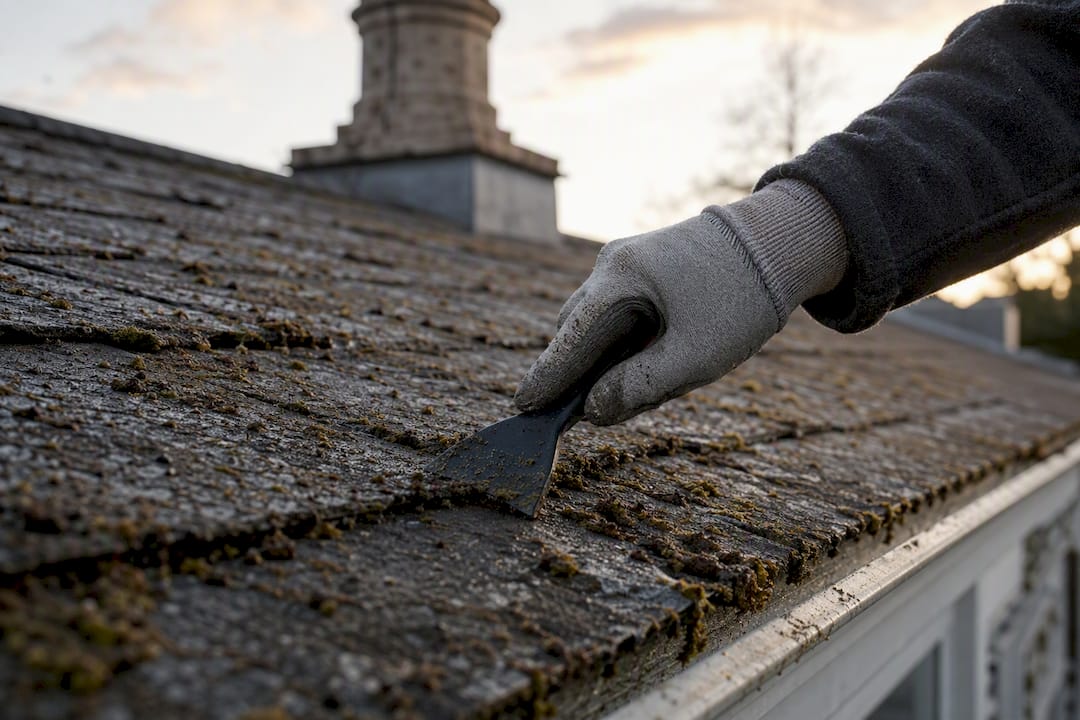
Chemical-only treatment without any physical removal leaves a roof looking patchy. Dead moss doesn’t just vanish. It bleaches, dries, and eventually washes off in rain, but that can take weeks, and heavier growth or lichen can take considerably longer to fully detach.
Pressure washing is the one method to avoid on asphalt or composite shingles.
- Strips the protective mineral granules that shield shingles from UV damage
- Forces water under lapped shingles, risking leaks
- Voids warranties from GAF, Owens Corning, and CertainTeed, among other major manufacturers
How do you soft-wash a roof yourself?
Getting this right is less about strength and more about patience. Rushing the dwell time or skipping the prep is where most DIY attempts go wrong.
- Check conditions first. Confirm your roof warranty doesn’t specifically ban chemical treatments, check the weather forecast for a dry 48 hour window, and note the roof’s pitch. Anything steeper than around 30 degrees is a hire-a-pro situation.
- Protect what’s below. Soak nearby plants and lawn with plain water before you start, and cover anything delicate with plastic sheeting. Runoff from moss killers can scorch foliage.
- Set up access safely. Use a ladder with stabilisers, have someone footing it, and wear a harness if you’ll be working near the eaves for any length of time. Where possible, treat the roof from the ladder rather than walking on it.
- Apply the treatment. Zinc sulfate, a proprietary product like Wet & Forget, or a heavily diluted bleach solution (never full strength) all work. Saturate the whole roof surface evenly rather than spot-spraying, and let it sit for 24 to 48 hours before rinsing.
- Rinse downhill, low pressure. A garden hose is enough. Work from the ridge down so you’re not forcing water backwards under shingles, then gently loosen any dead moss clumps that come away easily.
- Clear the gutters. Dead moss and grit will have washed straight into them.
- Inspect afterwards. Look for lifted or cracked shingles and note any bare patches for future monitoring.
Pro Tip: Don’t judge the job on day one. Soft-wash treatments keep working as growth weathers off over the following weeks, so a roof that still looks patchy immediately after rinsing often clears up considerably within a fortnight.
What tools and materials do you need, and what will they cost?
A basic soft-wash kit is cheap compared with the alternative of re-roofing early because moss damaged the shingles underneath.
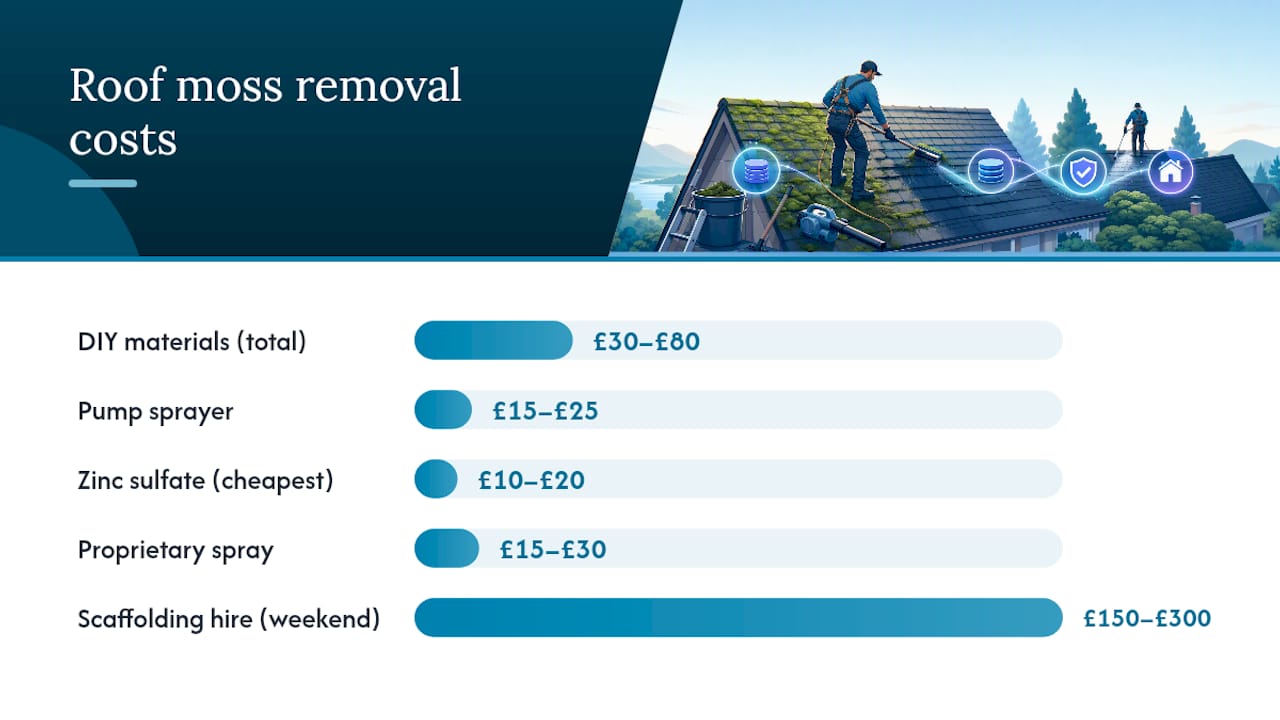
- Pump sprayer (2–4 litre): £15–£25
- Hose-end applicator (for larger roofs): £10–£20
- Soft-bristle broom: £10–£15
- Ladder stabiliser bar: £20–£40
- PPE (gloves, eye protection, old clothes) and plastic sheeting for plants: £15–£25
Chemical costs vary by product. Zinc sulfate is usually the cheapest option, at around £10–£20 per roof for an average semi-detached house. Wet & Forget or similar proprietary sprays run £15–£30 per treatment. Dilute bleach solutions cost almost nothing but need careful mixing and extra plant protection because the runoff is harsher.
Add it up and a full DIY job typically lands somewhere between £30 and £80 in materials, assuming you already own or can borrow a decent ladder. If the roof needs scaffolding or a tower for safe access, that alone can add £150–£300 for a weekend hire, which starts to close the gap with a professional quote.
When should you hire a professional instead?
Some jobs simply aren’t worth doing yourself, whatever the cost saving looks like on paper.
- Steep or fragile roofs. Anything over 30 degrees, or older/brittle tiles that crack underfoot, needs proper harness access and roofer experience.
- Heavy, established moss. Thick mats across large areas usually need repeat treatments and stronger dilutions than off-the-shelf DIY products offer.
- You’re not sure of the roof’s condition. A professional will flag lifted shingles or rot before it becomes a leak.
- Gutters you can’t safely reach. Moss removal without gutter clearance just moves the blockage problem, not solves it.
A reputable contractor will soft-wash rather than pressure wash, clear debris from gutters and valleys, and often offer zinc or copper ridge strips as an add on. UK professional roof cleaning typically runs £400–£800 for a standard domestic roof, or £8.50–£14 per square metre, with steeper or larger roofs pushing towards the top of that range. Adding ridge strips increases the quote, but it’s usually the single best money you’ll spend on prevention.
Before booking anyone, ask for proof of public liability insurance, a written description of their method (soft-wash, not pressure wash), and photos of previous jobs on a similar roof type.
How do you stop moss coming back?
Moss regrowth is a moisture and shade problem more than a one-off cleaning problem, so prevention beats repeat treatment every time.
- Clear leaves and debris from valleys and gutters at least twice a year, ideally spring and autumn.
- Prune back overhanging branches to cut shade and let the roof dry faster after rain.
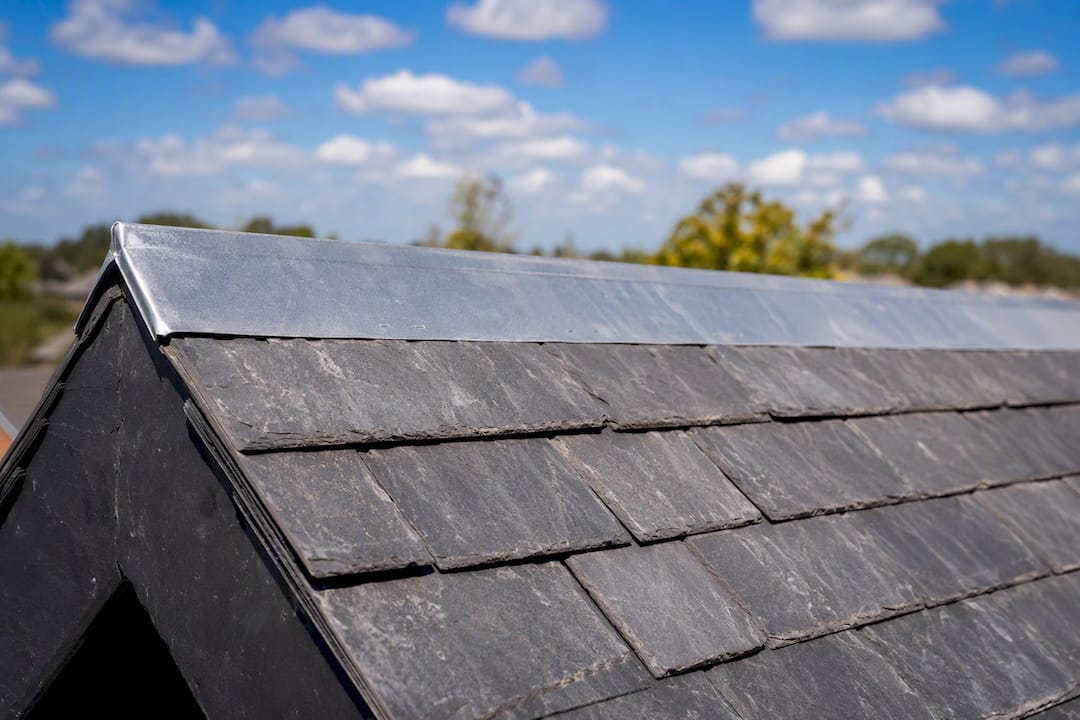
- Fit zinc or copper strips at the ridge; rain washes trace metal ions down the roof, which inhibits new moss spores from establishing.
- Zinc typically lasts multiple years depending on rainfall; without strips, expect to repeat a full soft-wash every few years.
- Keep chemical runoff away from drains, ponds, and waterways. Rinse into soil or grass where possible, not straight down a stormwater drain.
Which roofing partner backs this guidance?
Freshexteriors specialises in soft-wash roof cleaning and moss and algae treatment, using low-pressure application methods that protect shingle granules rather than strip them.
- Five-star customer reputation built on transparent, fixed pricing per job
- Soft-wash expertise across residential and commercial roofs, not just pressure washing
- Editorial guidance on this page reflects Michael’s assessment of published roofing industry standards and manufacturer warranty guidance
Why most homeowners get the risk equation backwards
The conventional advice on roof moss treats it as a cosmetic problem with a cosmetic urgency. It isn’t. Moss holds water against the shingle surface for days after rain has stopped everywhere else, and that sustained moisture is what actually shortens a roof’s life, not the moss itself sitting there looking unkempt.
What gets underestimated is how cheap prevention is next to the cost of neglect. A zinc strip costing a fraction of a full re-clean can push years between treatments. Most people skip it because it feels like an unnecessary extra when the roof already looks clean, then wonder why the moss is back within eighteen months.
The other overlooked point: DIY isn’t the risky option people assume it is, provided you stay off a steep roof and respect the dwell time. The real risk is impatience, rinsing too early, scraping too hard, or reaching for a pressure washer because it feels faster. Slower and gentler wins here, every time.
Get a professional soft-wash without the ladder risk
If your roof is steep, the moss has taken hold across a wide area, or you’d simply rather not spend a Saturday on a harness, Freshexteriors handles the whole job with the same soft-wash principles covered above, just with commercial-grade equipment and no risk to you.
Freshexteriors prices each roof cleaning job on a fixed rate per square metre, agreed before work starts, so there’s no vague estimate that balloons once someone’s on your roof. The team also fits zinc and copper ridge strips as part of the same visit, which is the prevention step most DIY jobs skip entirely. For homeowners who’ve read through the soft-wash steps above and decided their roof, pitch, or moss coverage is beyond a weekend job, get a quote from Freshexteriors and get it done properly the first time.
Sources
- How to Remove Moss from a Roof Safely | The Roofing Brief
- How much does roof cleaning cost in the UK in 2026? | Checkatrade