
Remove algae as soon as it makes a path or driveway slippery. A driveway-safe biocide or a diluted household solution applied to a small area, followed by a thorough rinse, deals with most patches. For heavy coverage, resin-bound surfaces, aged tarmac, or a spot that keeps coming back because of poor drainage, a professional softwash is the safer route.
TL;DR:
- High-pressure washing can damage surfaces, so it should be used only for rinsing after chemical treatments rather than as the primary cleaning method.
- Local conditions like persistent dampness and poor drainage significantly increase algae regrowth, often requiring drainage fixes beyond DIY scope.
- Sealer choices matter; penetrating sealers last longer for concrete, while topical sealers may lead to faster algae recurrence due to trapped moisture.
- For large or delicate surfaces, professional softwashing ensures algae spores are properly killed and reduces risk of surface damage.
- Addressing underlying issues like drainage and moisture retention is crucial to prevent algae from returning, rather than relying solely on repeated chemical treatments.
Table of Contents
- How do you identify algae on a driveway?
- Why algae on a driveway is a safety issue, not just an eyesore
- Step-by-step: removing algae without wrecking the surface
- Which cleaning method suits your driveway material?
- How do you stop algae coming back on a driveway?
- When should you call a professional instead of doing it yourself?
- Where to read more on algae and driveway care
- What the conventional advice on driveway algae gets wrong
- Get your driveway professionally cleaned and protected
- Sources
How do you identify algae on a driveway?
Algae shows up differently depending on where it grows and how wet the surface stays. Getting the identification right matters because moss, lichen, and mould all respond to different treatments, and using the wrong one wastes time or damages the surface.
- Green film or slick coating: a thin, slippery green layer, usually found in shaded corners or under trees, is classic algae.
- Black or dark green staining: often a mix of algae and mould on concrete or block paving that stays damp for long periods.
- Jelly-like blobs on gravel: this is typically Nostoc, which swells into greenish-brown gel after heavy rain and is common on compacted gravel and damp, north-facing ground.
- Fuzzy green or grey cushions: that’s moss, not algae. It sits proud of the surface rather than forming a flat film.
A quick scrape test helps: algae smears into a slippery paste, while moss lifts in clumps and lichen is crusty and hard to shift with a fingernail. Location is a giveaway too. If it’s shaded, near overhanging trees, or sits where water pools after rain, algae is the likely culprit. Before you walk across it normally, test the area carefully in shoes with good grip. That slickness underfoot is the main reason to deal with it at all.
Why algae on a driveway is a safety issue, not just an eyesore
The RHS is clear on this: algae rarely harms concrete, tarmac, or block paving directly. It’s a slip hazard, not a structural threat, and that changes how you should prioritise removal.
Slip risk isn’t seasonal. Algae film can turn a dry-looking driveway into a skating rink within minutes of light rain, especially where moss or lichen have already roughened the surface enough to hold moisture.
That said, algae can mask problems. A patch that keeps regrowing in the same spot every winter is often sitting on a hairline crack or a low point where water collects, and the algae is a symptom of that pooling rather than the cause. Act immediately on anything near a front door, steps, a sloped section, or a route used by children or older relatives. Purely cosmetic staining in a rarely used corner can wait for a dry weekend.
Step-by-step: removing algae without wrecking the surface
Rushing straight to a pressure washer is the most common mistake homeowners make, and it’s usually what causes lasting damage rather than the algae itself.
- Prep the area. Sweep off loose debris, move pots and furniture, and soak nearby plants and lawn edges with plain water so any runoff gets diluted rather than concentrated.
- Test a small patch first. Whatever method you choose, try it on an inconspicuous corner and wait 10 minutes to check for discolouration before treating the whole area.
- Go mechanical where you can. A stiff outdoor broom or a scraper handles light, dry algae film on concrete and block paving without any chemicals at all.
- Use a household treatment for stubborn patches. Oregon State University Extension Service suggests a diluted bleach solution, roughly one cup of household bleach to a gallon of water with a squirt of detergent, applied with gloves and eye protection and never mixed with other cleaning products. Vinegar and washing-up liquid work on light staining but won’t touch anything already colonising the surface below.
- Softwash for anything beyond a small patch. A biocide-based softwash kills the algae and its spores rather than just stripping the visible layer, which is why professionals lean on it instead of pressure alone.
- Rinse thoroughly, then finish with controlled pressure if needed. BobVila’s guidance recommends treating organic growth first, then using a pressure washer with a flat surface attachment rather than a narrow turbo nozzle, which concentrates force enough to etch concrete or blow out jointing sand.
- Re-sand joints and consider a sealer once the surface is dry, particularly on block paving.
Pro Tip: Never mix bleach with other household cleaners, especially anything containing ammonia. The fumes are genuinely dangerous, and it’s an easy mistake to make when you’re grabbing whatever’s under the sink.
Which cleaning method suits your driveway material?
The surface you’re standing on dictates how aggressive you can be, and getting this wrong is where most DIY jobs go badly.
- Concrete: tolerates diluted bleach and moderate pressure well, but avoid acid-based cleaners, which can pit and discolour the surface permanently. A penetrating sealer afterwards helps long term.
- Tarmac and asphalt: needs lower pressure and gentler chemistry. Aggressive jets can strip the bitumen binder that holds the surface together, leaving it crumbly at the edges.
- Block paving: pre-treat with a softwash, then use controlled pressure between the blocks rather than blasting straight down. Re-sanding the joints with kiln-dried sand afterwards restores stability and reduces the water retention that invites algae back.
- Resin-bound and coloured surfaces: always test a patch first. High pressure and harsh chemicals can mar the resin matrix and fade colour, so gentle chemical treatment with light agitation gives better results than force.
- Gravel and compacted surfaces: Nostoc needs gentle removal by hand or with a rake rather than pressure washing, which just spreads the gel-like blobs further. Checking and improving drainage underneath matters more here than any cleaning product.
If you’re weighing up equipment for the job yourself, this guide to hot water pressure washing is worth a look before you commit to a machine, since technique matters as much as the equipment itself.
How do you stop algae coming back on a driveway?
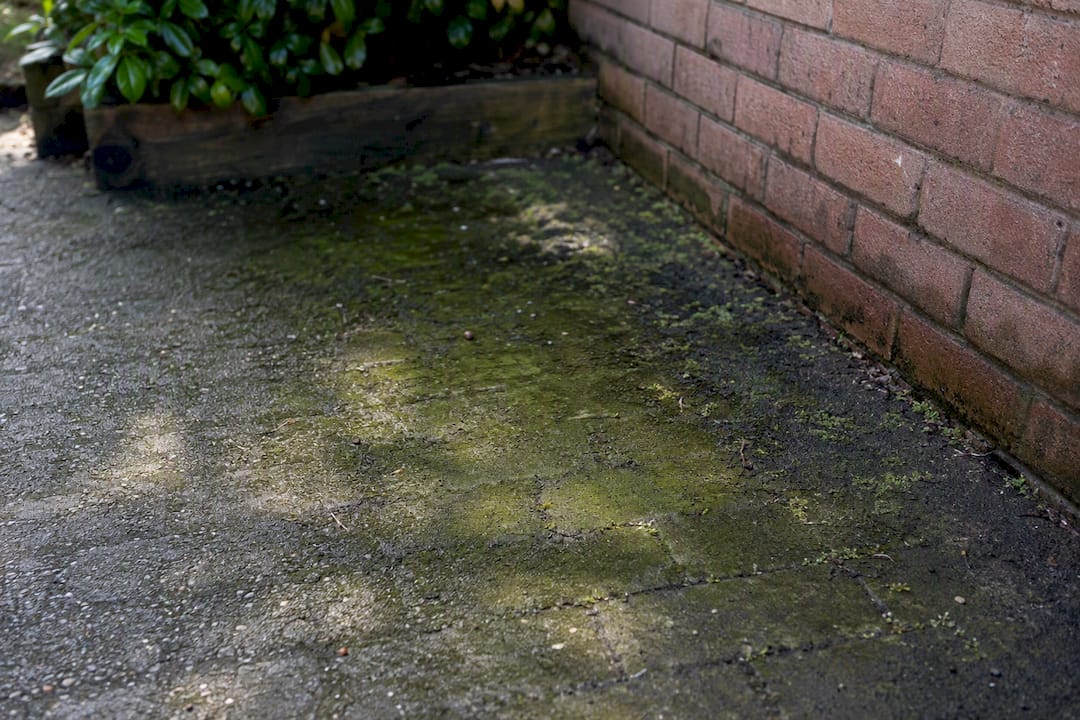
Removing algae once is the easy part. Keeping it off is where most homeowners give up too soon, usually because they treat the symptom on repeat rather than the underlying moisture problem.
Start with drainage. If water sits on the surface for more than an hour after rain, that’s the real driver of regrowth, and no amount of biocide will fix it permanently. Regrading a low spot, adding a French drain, or simply clearing blocked gullies does more long-term good than repeat chemical treatments. Pruning back overhanging branches and redirecting sprinklers away from shaded patches reduces the damp conditions algae needs in the first place.
Sealers split into two camps, and the difference matters for concrete driveways especially.
| Sealer type | How it works | Reapplication | Best for |
|---|---|---|---|
| Penetrating (silane-siloxane) | Soaks into pores, forms a water-repellent barrier | Roughly every 3 to 5 years | Concrete driveways wanting durable moisture protection |
| Topical acrylic (‘wet look’) | Sits on the surface, gives a glossy finish | Requires more frequent reapplication | Cosmetic appearance where reapplication is acceptable |
Topical sealers look sharp when new but can trap moisture underneath if they start to fail, which sometimes speeds regrowth rather than preventing it. A penetrating sealer is the better long-term investment for anyone tired of repeating the same job every spring. Realistically, a proper professional biocide treatment combined with good drainage keeps most driveways largely clear for three to five years, though heavily shaded, low-lying spots will always need more frequent attention.
When should you call a professional instead of doing it yourself?
Some jobs are genuinely fine to tackle with a broom and a bottle of diluted bleach on a Saturday morning. Others aren’t, and knowing the difference saves both money and surface damage.
Call in a professional when:
- The affected area covers more than a few square metres, or spans the whole driveway.
- The surface is resin-bound, aged tarmac, or natural stone, where the margin for error with pressure and chemicals is small.
- Algae keeps returning in the same spot despite repeat cleaning, which usually points to a drainage fix beyond a DIY scope.
- Anyone in the household has mobility concerns and the slip risk needs sorting quickly and properly.
A reputable exterior cleaning service should cover the full sequence rather than skipping straight to pressure: an inspection to identify the growth and any drainage issues, a softwash or biocide application to kill spores at the source, controlled pressure cleaning to lift residue without etching the surface, re-sanding of block paving joints, and a sealing recommendation suited to your material. Freshexteriors builds jobs around exactly that sequence rather than a single quick blast, which is the difference between a driveway that looks clean for a fortnight and one that stays clean for years.
| Job factor | What it affects |
|---|---|
| Surface area (square metres) | Time on site and overall job cost |
| Access (gates, slopes, parked cars) | Equipment choice and labour time |
| Surface material | Pressure limits and chemical choice |
| Severity and history of regrowth | Whether drainage work is also needed |
Where to read more on algae and driveway care
A few sources back most of the guidance in this article, and they’re worth bookmarking if a patch comes back or you want a second opinion before treating a delicate surface.
- The RHS guide to algae, lichens and mosses on hard surfaces covers the horticultural side of why these growths appear and why they’re a safety rather than structural issue.
- Oregon State University Extension Service gives practical, tested household dilution ratios and safety precautions.
- BobVila’s pressure-washing guide explains correct technique and the risks of getting pressure settings wrong.
- Softwashing.uk breaks down why softwashing outperforms pressure-only cleaning for lasting results.
What the conventional advice on driveway algae gets wrong
Most guidance on this topic treats algae as a one-off cleaning job rather than a symptom of standing water. That’s backwards. A driveway that keeps growing algae in the same corner every fifteen months isn’t unlucky, it’s telling you something about drainage that no amount of bleach will fix.
The other overrated idea is that stronger pressure equals a better result. It doesn’t. Overuse of high-pressure jets is a bigger cause of driveway damage than the algae ever was, and it’s an easy trap when a quick blast looks satisfying in the moment.
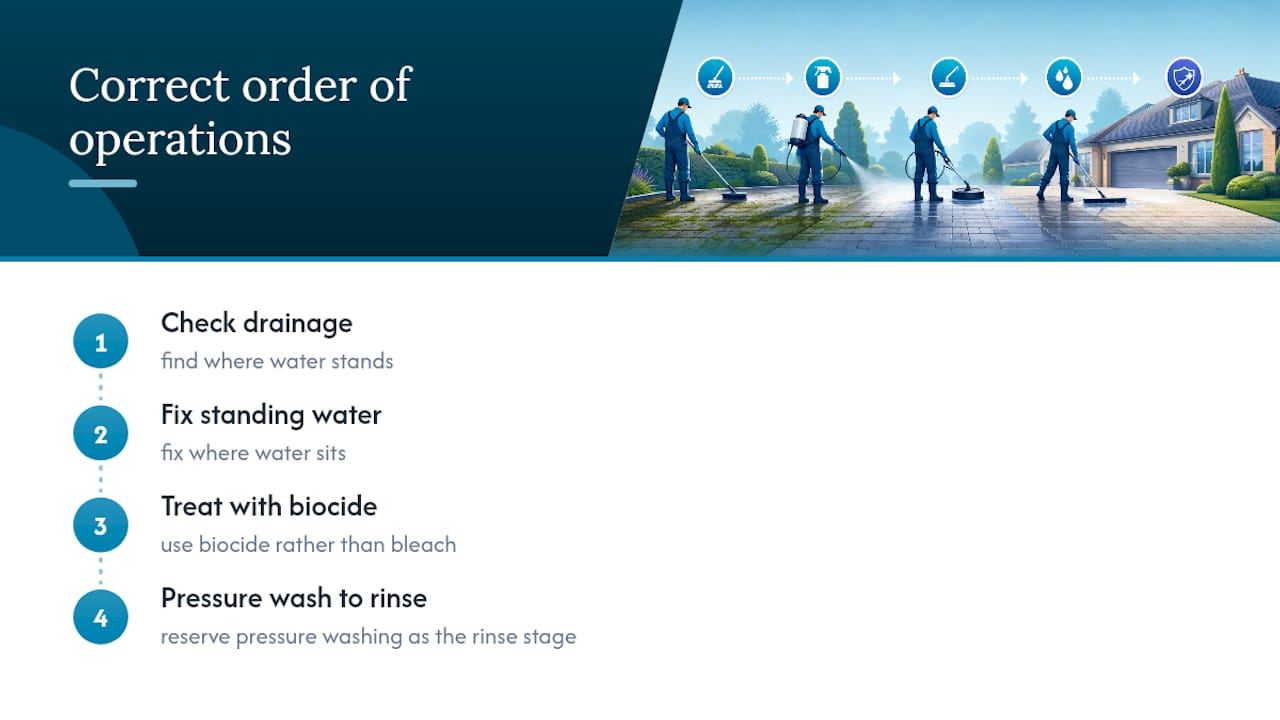
If you take one thing from this guide, prioritise the drainage check before you buy another bottle of cleaner. Fix where water sits, treat with a biocide rather than force, and reserve pressure washing for the rinse stage, not the main event. That order of operations, not the specific product you reach for, is what actually determines whether the problem returns next winter.
— Michael
Get your driveway professionally cleaned and protected
If you’ve read this far and the idea of testing dilution ratios and pressure settings on a Saturday morning doesn’t appeal, that’s exactly the gap Freshexteriors fills. Rather than a one-off DIY fix that might need repeating within a season, Freshexteriors runs the full sequence properly: inspection, softwash treatment to kill algae at the root, controlled pressure cleaning that won’t etch concrete or strip tarmac binder, and joint re-sanding or sealing where the surface needs it.

That matters most on resin-bound driveways, block paving, or any surface where a badly judged pressure setting turns a cleaning job into a repair bill. Fixed, transparent pricing per square metre means you know the cost before work starts, and the job is done once rather than in stages you have to manage yourself. If your driveway has a recurring damp patch or algae that keeps coming back no matter what you try, book a driveway cleaning with Freshexteriors and get it sorted properly the first time.