
Light grime on uPVC fascias and soffits is almost always safe to clean yourself with warm soapy water or a dedicated uPVC cleaner. Stubborn algae, awkward access, or signs of rot and blocked vents call for a professional soft wash, typically costing a modest amount. Whichever route you take, never reach for a high-pressure washer or bleach. Both routinely cause more damage than the dirt ever did.
TL;DR:
- Homemade cleaning with soap and water is effective for grime, but stubborn algae or rot requires professional soft washing to avoid damage.
- Use low-pressure tools, soft brushes, and solvent-free cleaners for safe, effective fascia and soffit maintenance, avoiding bleach and high-pressure washers.
- Cost for DIY cleaning remains low if equipment is owned, but professional services typically charge in the low hundreds depending on property size and condition.
- Heights, persistent algae, rot signs, or structural issues should prompt professional intervention to ensure safety and proper treatment.
- Regular annual cleaning and inspections are essential, focusing on vents, paint, and joints to prevent unnoticed damage and costly repairs later.
Table of Contents
- What are fascias and soffits, and why does cleaning them matter?
- How do you clean soffits and fascias safely at home?
- What tools and cleaning products actually work?
- How much does fascia and soffit cleaning cost?
- When should you call in a professional instead?
- How often should you clean, and what should you look for?
- What does a professional soft-wash service actually involve?
- Why most fascia cleaning advice misses the point
- Get your fascias and soffits professionally cleaned
- Sources
What are fascias and soffits, and why does cleaning them matter?
The fascia is the board that runs along the edge of your roofline, holding your guttering in place and stopping water getting behind the roof structure. The soffit sits underneath it, covering the gap between the wall and the roof edge, and usually houses the vents that let your roof space breathe.
Cleaning them isn’t just cosmetic. Algae and green staining hold moisture against the surface, and that damp film speeds up wear on both timber and uPVC. Blocked vents stop air moving through the loft, which encourages condensation and, eventually, timber rot.
Material matters too:
- Timber fascias and soffits need gentler treatment and usually sit on a repainting cycle, since bare wood exposed by peeling paint absorbs water fast.
- uPVC fascias and soffits are lower maintenance but still collect algae and diesel grime, particularly near busy roads or overhanging trees.
How do you clean soffits and fascias safely at home?
Start gently and build up, never the other way round. Most jobs need nothing more than water, a mild detergent, and patience.
- Pre-brush loose debris. A soft brush knocks off cobwebs, dead leaves, and dried dirt before you introduce any water, which stops you smearing grit across the surface.
- Wash with warm water and washing-up liquid. Work with a soft sponge or brush in small, manageable sections rather than tackling the whole roofline at once, rinsing thoroughly as you go.
- Bring in a uPVC cream cleaner for stubborn marks. These solvent-free formulas lift ingrained algae and staining without attacking the plastic. Follow the dwell time on the bottle, then rinse well; leaving cleaner to dry on the surface can leave its own residue.
- Rinse each section before moving on. Don’t let cleaning solution dry in the sun, it tends to leave streaking that’s harder to shift than the original dirt.
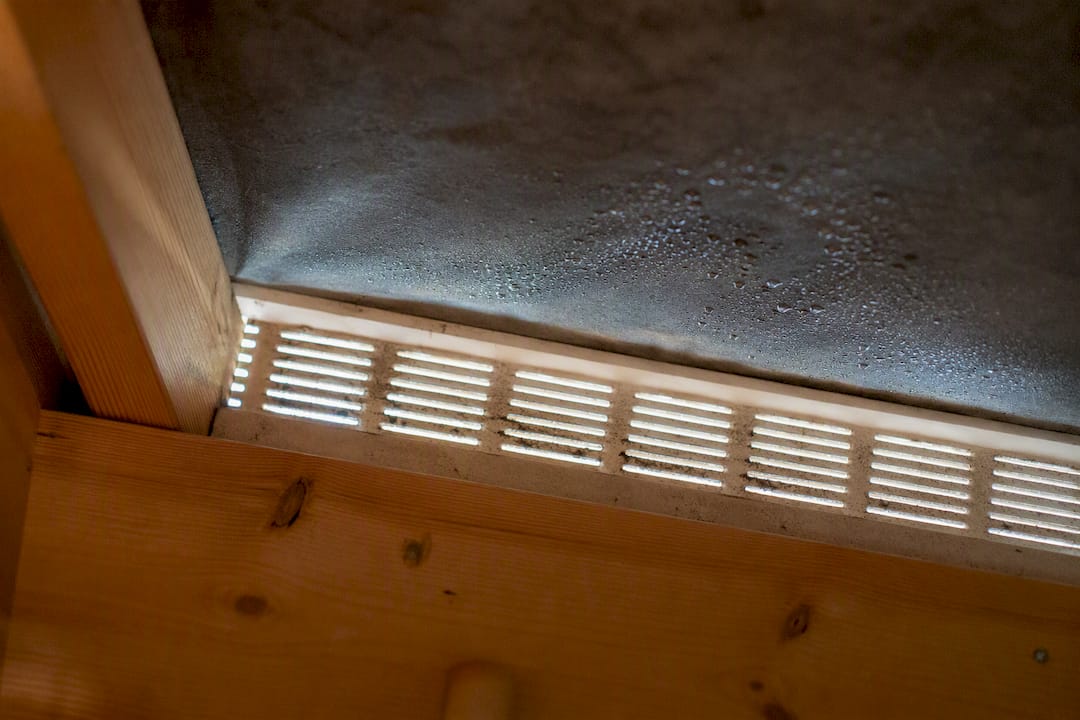
- Clear the vents last. A small brush or an old toothbrush works well for clearing debris from soffit vent apertures. Avoid directing a jet of water into them, since forcing water into ventilation grilles is one of the most common causes of hidden damp problems in a roof void.
This is genuine soft-wash territory, even done by hand. Professionals use the same low-pressure philosophy with proper equipment, which is why a soft wash rather than a jet wash is the accepted method for removing algae without forcing moisture where it shouldn’t go. Anything above a garden hose’s pressure is a risk you don’t need to take on a domestic ladder.
Pro Tip: Clean on an overcast day rather than in bright sunshine. Cleaning solution dries fast in direct heat, and that’s what causes the patchy streaks homeowners often mistake for a bigger staining problem.
What tools and cleaning products actually work?
You don’t need a van full of kit. A short, well-chosen list does the job for most homes.
Worth buying or hiring:
- A telescopic pole with a soft brush head, so you can reach most single-storey rooflines from the ground.
- Soft-bristle brushes and a sponge for detail work around vents and joints.
- A bucket, mild detergent, and a low-pressure garden hose for rinsing.
- A stable stepladder or platform, used only where a pole genuinely can’t reach.
Worth buying:
- Solvent-free uPVC cream cleaners for algae and ingrained grime.
- Eco-friendly biological cleaners where algae keeps returning, since these break down organic growth rather than just masking it.
Avoid entirely:
- Abrasive scourers or wire wool, which scratch uPVC and dull its finish permanently.
- Bleach-based products, which can discolour or weaken the plastic over time.
- Pressure washers run above sensible domestic settings. It doesn’t take much force to blast water past a seal that was never designed to be sprayed directly.
How much does fascia and soffit cleaning cost?
DIY costs stay modest if you already have basic kit. A telescopic pole runs roughly £30 to £150 depending on reach and brush quality, cream cleaners cost £5 to £30, and ladder hire adds a bit more if you need it. A straightforward light clean often comes with modest DIY costs, usually a one-off spend since the pole and brush get reused every year.
Professional pricing sits in the low hundreds for a typical home, though the final quote depends on several things:
- Property size and roofline length. A detached house with a long run of fascia costs more than a mid-terrace.
- Access difficulty. Steep roofs, conservatories underneath the soffit, or awkward extensions push the price up because they slow the job down and often need extra equipment.
- Condition of the surface. Years of untouched algae or nicotine-style staining near a busy road takes longer to lift than a routine annual clean.
- Extras. Combining the job with gutter clearing or a moss treatment on the roof usually costs less per item than booking them separately, but adds to the total on the day.
- Regional variation. Labour costs shift the price bracket depending on where you live, same as any trade service.
When should you call in a professional instead?
DIY has real limits, and knowing where they sit saves you a trip to A&E as much as it saves your fascias.
- Height and access are the main trigger. If reaching the roofline safely means a ladder against an upstairs wall rather than a pole from the ground, that’s a job for someone insured and equipped for it.
- Repeat algae or persistent staining that returns within weeks usually means the growth needs a biocidal treatment rather than another scrub, which is squarely a professional soft-wash job.
- Any sign of rot, cracking, or structural movement needs inspection before cleaning, not after. Cleaning over a problem doesn’t fix it.
- Ask the right questions before booking. Find out what method they use (soft wash versus pressure), whether they carry insurance, how they handle waste water, whether biocides are involved, and what aftercare they recommend. Checking trade body membership or equivalent professional accreditation is a quick way to separate a serious contractor from someone with a jet washer and a van.
How often should you clean, and what should you look for?
A gentle annual clean suits most uPVC, or every six months if you’re under trees or near a main road. Timber fascias need attention more often and usually fall into your repainting schedule anyway.
While you’re up there, check for:
- Peeling or bubbling paint on timber sections.
- Warping, cracking, or gaps at joints.
- Soft or spongy patches, a sign of rot underneath.
- Vents blocked with debris, cobwebs, or nesting material.
- Staining that comes straight back within a few weeks of cleaning.
Photograph anything that looks wrong and get a professional inspection before it becomes a bigger repair.
What does a professional soft-wash service actually involve?
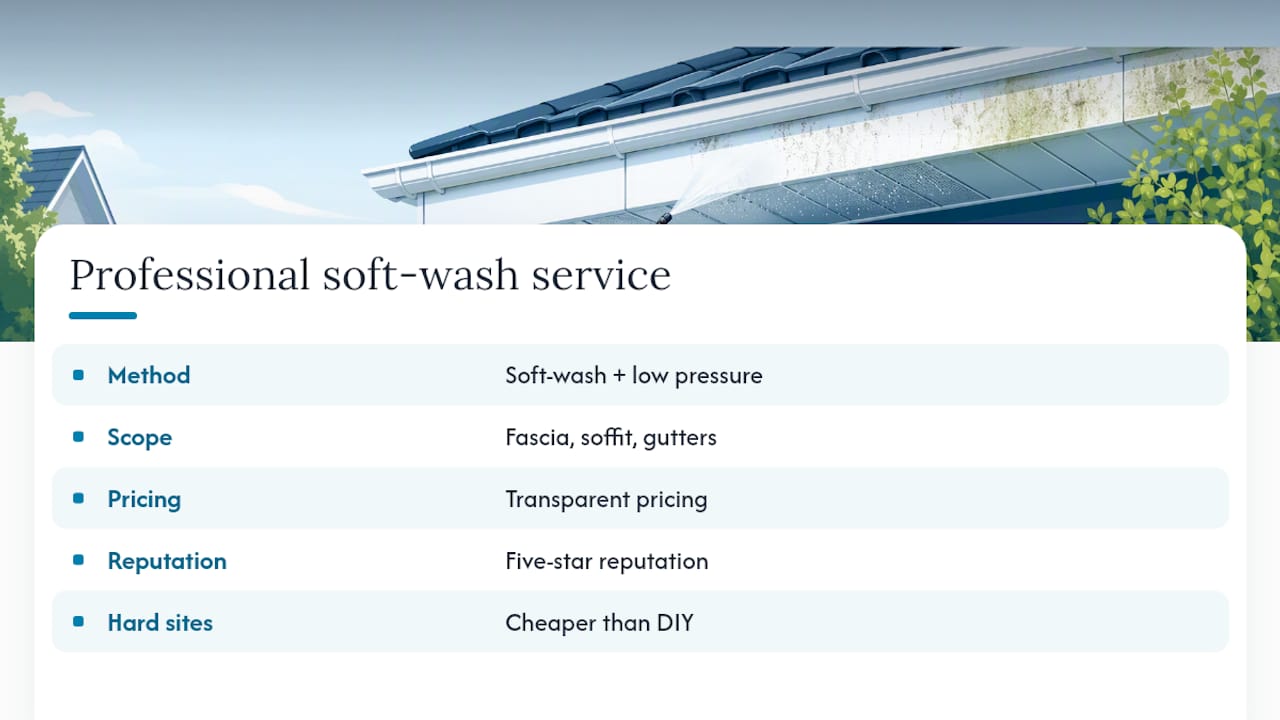
Reputable contractors use soft-wash chemistry paired with controlled low-pressure equipment, lifting algae and grime without the risk of forcing water into joints or vents. Freshexteriors builds fascia, soffit, and gutter cleaning into a wider exterior cleaning service, with transparent pricing and a five-star reputation built on jobs homeowners can actually see the results of. On difficult or high-access properties, that controlled approach often works out more cost-effective than repeated DIY attempts that never quite finish the job.
Why most fascia cleaning advice misses the point
Most guides treat fascia and soffit cleaning as a cosmetic chore, somewhere between washing the car and cleaning the windows. That undersells what’s actually at stake. The vents in your soffit are part of your roof’s ventilation system, and cleaning is the one time most homeowners ever get eyes on them. Skip the inspection element and you’re just polishing the surface while a blocked vent quietly encourages condensation in the loft above.
The conventional advice also underplays how much damage a domestic pressure washer can do. It looks like the fast option, but forcing water into a joint that was sealed for rainfall, not a jet, is how a simple clean turns into a repair bill. Soft, low-pressure methods aren’t the cautious choice here; they’re the only sensible one.
If you take one thing from this, prioritise the inspection over the shine. A slightly streaky soffit is cosmetic. A rotting one behind fresh paint is not.
— Michael
Get your fascias and soffits professionally cleaned
If your roofline needs more than a pole and a bucket, that’s exactly where Freshexteriors earns its keep. Rather than juggling ladders and guessing at dwell times for cream cleaners, you get a soft-wash service built specifically for uPVC and timber fascias, with the same controlled equipment used on gutters and render cleaning across the rest of the property.

It suits homeowners who’ve spotted algae that keeps coming back, access that a telescopic pole can’t reach safely, or a roofline that hasn’t been touched in years and needs a proper reset before a repaint or resale. Freshexteriors prices the job transparently before work starts, so there’s no guessing what a “low hundreds” estimate actually means for your property. For readers who also want the roof-space side of the equation covered, checking your loft ventilation is worth pairing with seasonal roof maintenance advice once the fascias are done. If your roofline fits any of that description, get a fascia and soffit cleaning quote and see what a proper soft wash actually costs for your home.