
Sweep off debris, apply a pH-neutral cleaner, scrub with a soft brush along the grain, then rinse thoroughly. That covers most porcelain patios. If grime has really taken hold, a low-to-medium pressure wash finishes the job, but keep the nozzle angled away from the joints and never reach for anything abrasive or acidic. Professional cleaners handle the harder cases, where jointing is already eroded or staining has set in.
TL;DR:
- Use low-to-medium pressure with a wide fan tip and keep the nozzle 30 to 50 centimeters from the surface to avoid damaging joints during pressure washing.
- Regularly inspect joints after cleaning and re-point or reseal if they appear cracked, thin, or have gaps to prevent water ingress and weed growth.
- Algae, oil, rust, and grout haze require targeted treatments, and mixing bleach with acidic cleaners must be avoided to prevent toxic fumes and surface damage.
- Routine weekly cleaning, including sweeping and spot rinsing, effectively prevents buildup, making deep cleans and repairs less frequent and easier.
- Hiring professional cleaners is advisable for stubborn stains, eroded joints, persistent odors, or limited mobility, as they ensure proper pressure, chemical use, and joint preservation.
Table of Contents
- Your porcelain patio cleaning checklist (20 to 40 minutes)
- When do you need to deep-clean, and is pressure washing safe?
- How do you remove algae, oil, rust and grout haze from porcelain?
- What tools and cleaning products are safe for porcelain?
- How often should you clean a porcelain patio?
- When should you call a professional patio cleaner?
- Three things to remember about porcelain patio cleaning
- What people get wrong about cleaning a porcelain patio
- Get your patio properly cleaned without lifting a brush
- Sources
Your porcelain patio cleaning checklist (20 to 40 minutes)
Most porcelain patios need nothing more elaborate than this sequence, and you can get through it before lunch.
- Clear the debris. Use a stiff broom or leaf blower to remove leaves, grit and loose dirt. Skip this step and you’ll just be grinding grit into the surface once you start scrubbing, which is how fine scratches appear on matt finishes.
- Pre-rinse the whole area. A garden hose or low-pressure setting loosens surface dirt and stops your cleaner working overtime on dry grime.
- Mix your cleaner. A dedicated pH-neutral patio cleaner is best; for light seasonal dirt, a few drops of washing-up liquid in a bucket of warm water does the job too. Manufacturer guidance consistently points to non-hazardous, low-VOC cleaning chemicals rather than anything harsh.
- Scrub with a long-handled soft brush. Follow the texture of the tile rather than scrubbing against it, paying particular attention to the joints where dirt collects first.
- Rinse with clean water. Dirty rinse water just redistributes soil and can leave a soapy film that reduces grip underfoot.
Wear gloves and eye protection when handling any concentrated cleaner, and always test a new product on a hidden corner before treating the whole patio. For a typical 20 square metre area kept up with an annual wash and joint brushing, this kind of routine clean takes around 20 to 30 minutes once the patio is on a regular schedule.
When do you need to deep-clean, and is pressure washing safe?
Routine maintenance keeps a patio looking fresh. Deep cleaning is for the patio you’ve neglected for a season or two, where grime, algae, or old sealant residue has built up beyond what a bucket and brush will shift.
Pressure washing porcelain is generally safe, and correct technique matters more than raw power. Get this wrong and you can blast jointing compound straight out of the gaps, which then needs re-pointing.
- Use low-to-medium pressure with a wide fan tip, never a narrow turbo nozzle.
- Keep the nozzle 30 to 50 centimetres from the surface.
- Angle the spray at roughly 30 to 45 degrees to the joint line, never straight down into it.
- Work in overlapping passes and keep the nozzle moving. A static jet held in one spot is what etches or strips joints.
Applying your cleaner first and letting it dwell for the manufacturer-recommended time, usually 3 to 10 minutes, breaks down grime chemically before you touch the trigger. That cuts down how much pressure you actually need, which is the safest way to protect both tile and grout.
Pro Tip: Once you’ve rinsed off, walk the whole patio and check the joints. If jointing compound looks thin, cracked, or has washed away in patches, that’s worth addressing before it lets water and weeds underneath the tiles.
Once you’re done, give the surface a final inspection while it’s still wet. Patchy discolouration in the joints usually means it’s time to consider re-pointing rather than another round of scrubbing.
How do you remove algae, oil, rust and grout haze from porcelain?
Different stains need different treatments, and using the wrong one can make things worse rather than better.
- Algae and moss: These almost always take hold in the porous jointing material rather than on the porcelain itself, especially in shaded, damp corners of the garden. Damp, shaded conditions are exactly where algae colonises jointing compound, so treat the joints with a diluted algae killer, let it dwell, brush thoroughly, then rinse. A long-acting biocide applied once a year helps prevent regrowth in the worst-affected spots.
- Oil and grease: Blot immediately rather than wiping, which just spreads the stain. Apply a proper degreaser and scrub gently; set-in stains may need two or three repeat treatments. Skip abrasive pads, which can dull the surface finish permanently.
- Rust: Use an iron or rust-specific remover formulated for tile, following the manufacturer’s dwell time exactly. Test on an offcut or hidden edge first, since some rust removers contain acids that react badly with certain grout colours.
- Grout haze: This is the cloudy residue sometimes left after installation, sitting on the surface rather than embedded in the tile. A dedicated grout-haze remover with a nylon pad, followed by a thorough rinse, clears it without marking the surrounding tile.
One rule overrides all of the above: never mix bleach with acidic cleaners. The combination produces toxic fumes, and it’s a mistake made more often than you’d think when people are trying to tackle two stains at once.
What tools and cleaning products are safe for porcelain?
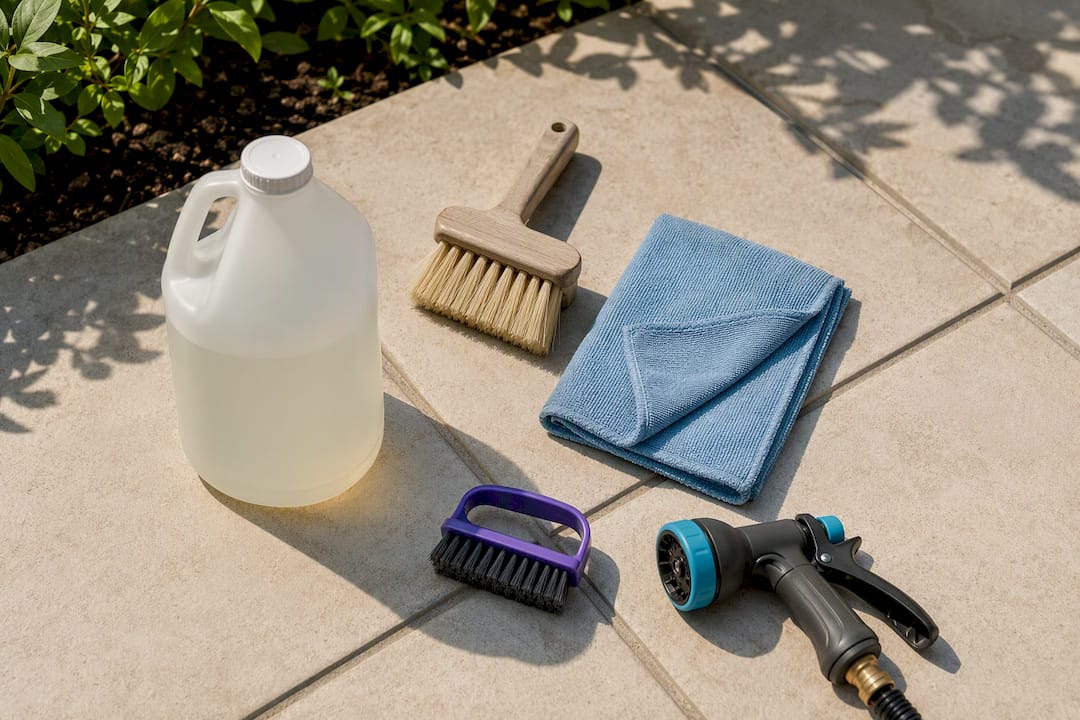
The right kit makes the difference between a patio that looks refreshed and one that ends up dull or scratched.
Tools worth having:
- A long-handled soft-bristle brush for general scrubbing without bending double.
- Nylon scrub pads for stubborn spots that need a bit more agitation than a brush gives.
- A plastic scraper for stuck-on debris like dried leaves or bird mess.
- An adjustable nozzle attachment if you’re using a pressure washer.
Product categories to reach for:
- pH-neutral tile cleaners for general grime.
- Purpose-made patio degreasers for oil and cooking spills.
- Grout-haze removers for post-installation residue.
- Diluted algae treatments for joint growth.
What to avoid entirely: hydrofluoric-acid products, abrasive scouring powders, and wire brushes. All three can etch the glaze or scratch textured surfaces, and the damage doesn’t buff out. Textured, structured finishes need bristles stiff enough to reach into the surface pattern, while polished tiles need a gentler touch to avoid visible scratch marks. Whatever you choose, test it on a small, hidden area first, and keep a note of the dilution ratio and dwell time that worked, so next season’s clean takes less guesswork. The same testing principle applies to interior surfaces too, where choosing the right detergent for the material matters just as much.
How often should you clean a porcelain patio?
Most of what settles on porcelain is surface-level atmospheric dirt, not anything embedded in the tile, so staying ahead of it with small, frequent tasks beats one big annual battle.
- Spring: a full clean following the checklist above, once winter grime and any leftover algae are visible.
- Summer: quick checks every few weeks, spot-treating anything before it sets.
- Autumn: regular leaf clearing, since decomposing leaves stain and feed algae in the joints.
- Winter: minimal intervention. Never use rock salt on porcelain, as it can damage the surface and grout; use grit or sand instead if you need traction on ice.
A weekly or fortnightly sweep and spot-rinse takes under 10 minutes and prevents most of the buildup that turns into a weekend project later. If joints start showing visible erosion or gaps, that’s your signal to think about resealing or re-pointing rather than waiting for the next deep clean.
When should you call a professional patio cleaner?
DIY covers most situations, but some jobs are genuinely better left to someone with the right kit and experience.
Call in a professional when you’re dealing with:
- Large-area staining that’s resisted repeated attempts with standard cleaners.
- Jointing compound that’s visibly eroded, cracked, or missing in patches.
- A persistent odour or contaminant you can’t identify or shift.
- Limited time or mobility that makes a full-day cleaning job impractical.
A competent professional brings controlled pressure settings, soft-wash alternatives for delicate areas, targeted chemical treatments matched to the specific stain, and a proper post-clean inspection of the joints. If re-pointing is needed, that gets flagged and quoted rather than left as your problem to discover next spring.
Pro Tip: When getting quotes, ask exactly what pressure settings and products will be used, whether the company carries insurance, and what guarantee comes with the work. A vague answer to any of those three is worth noting.
Some professional exterior cleaning providers offer driveway and patio cleaning, re-pointing, and moss and algae treatment, which means the same visit that cleans your patio can also sort out the joints if they need attention.
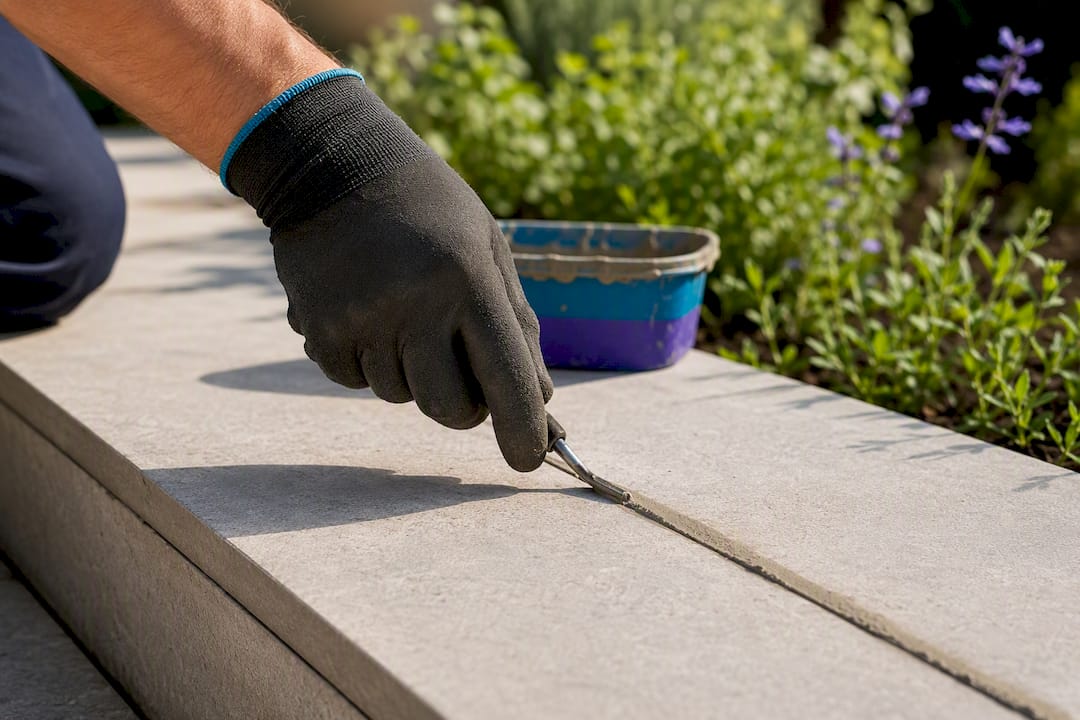
Three things to remember about porcelain patio cleaning
Stick to pH-neutral cleaners over anything acidic or abrasive. Protect the joints, since that’s where nearly all the real damage risk lives, not on the tile face itself. And always test a new product on a small, hidden area before you commit the whole patio to it.
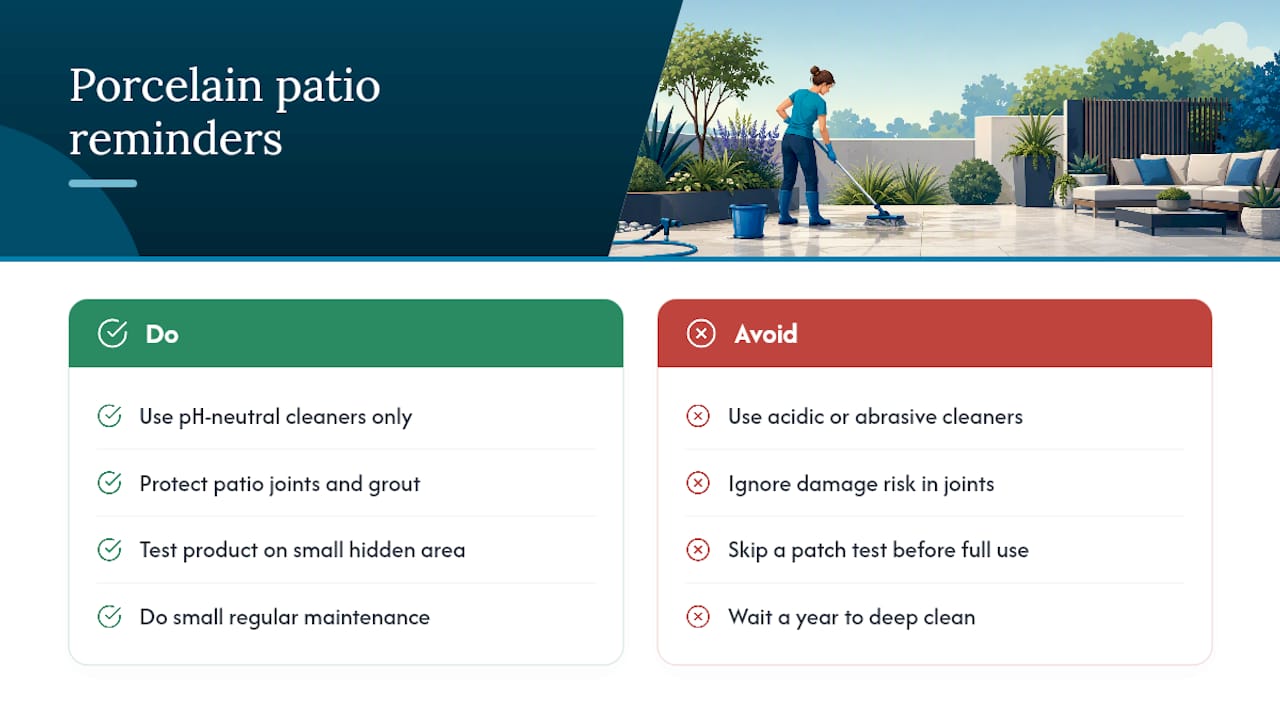
For manufacturer-level detail on tile care generally, Daltile’s care guidance is a solid reference. And if a patio has gone past what a weekend of scrubbing can fix, Fresh Exteriors can take it from there. Small, regular maintenance will always beat waiting a year and doing it all in one exhausting afternoon.
What people get wrong about cleaning a porcelain patio
Most advice on this topic focuses entirely on the tile and ignores the joints, which is backwards. Porcelain itself is dense, low-porosity, and genuinely hard to damage with routine cleaning. The jointing compound between the tiles is the vulnerable part, and it’s where algae takes hold first, where pressure washers do their real damage, and where most professional call-outs actually originate.
The other misconception worth challenging: that pressure washing is inherently risky on porcelain. It isn’t, provided the technique is right. The people who damage their patios with a pressure washer are almost always using too narrow a nozzle, holding it too close, or pointing it straight down a joint line instead of angling away from it. Fix the technique and pressure washing becomes one of the safest, fastest tools available, not a liability.
If there’s one habit worth adopting over any product or gadget, it’s frequency. A patio cleaned lightly every few weeks never needs the harsh chemicals or aggressive pressure that a neglected one does. Prevention genuinely is the cheaper, easier path here.
— Michael
Get your patio properly cleaned without lifting a brush
If the checklist above sounds manageable but the thought of hiring, calibrating and running a pressure washer safely on your own patio doesn’t, that’s exactly the gap professional exterior cleaning services can fill. Rather than buying kit you’ll use twice a year, you get a team that already knows the right pressure, the right dwell times and how to keep joints intact, arriving with everything needed in one visit.

Some exterior cleaning services cover driveway and patio cleaning, re-pointing where joints have eroded, and moss and algae treatment for persistent patches. That combination matters: a patio that needs cleaning often needs its joints checked too, and having both handled in the same visit saves a second call-out later. If your patio has gone past routine maintenance, or you’d simply rather not spend a Saturday doing it yourself, get a quote from Fresh Exteriors and find out what it would take to get it looking right again.