
Most rust stains lift with the right escalation: mild household acids first, oxalic acid chelators next, and a poultice for anything stubborn. Test a hidden patch before touching the main stain, protect nearby plants and drains from runoff, and expect two or three attempts rather than one miracle fix.
TL;DR:
- Fresh rust stains respond well to household remedies like vinegar or lemon salt paste, but older, set-in stains often require stronger chemicals or poultices.
- Applying oxalic acid or commercial chelators can effectively remove stubborn stains, especially when neutralized and rinsed properly, but reoccurrence may indicate underlying rusted rebar.
- Pressure washing must be done at low to moderate pressure, keeping the nozzle at least six inches from the surface to avoid damage and limited to rinsing and finishing.
- Always test chemicals in hidden areas first, protect plants from runoff, and neutralize acids with baking soda to prevent environmental damage during cleaning.
- Repeated rust stains often stem from structural issues or source contamination such as metal furniture or irrigation water, requiring source control or professional inspection if they persist.
Table of Contents
- Quick checklist: which method to choose first
- Step-by-step: treat light or recent rust stains with household items
- Step-by-step: escalate to oxalic acid, chelators or a poultice for stubborn stains
- Pressure-washing: how to use it safely and what it can’t do
- Safety, testing and environmental precautions
- Prevention and follow-up: sealing and source control to stop recurrences
- Professional perspective: when DIY stops being the right call
- Get your driveway properly cleaned and protected
- Sources
Quick checklist: which method to choose first
Before opening any bottle, spend two minutes matching the stain to the method. Rust that appeared last week behaves very differently to rust that’s been baking into the pores for three summers.
Start by identifying the finish. Plain broom-finished concrete tolerates most cleaners; sealed, stamped, or coloured concrete needs a gentler hand and a mandatory test patch, since professionals recommend matching cleaner strength to the finish to avoid etching or discolouration.
Use this as your starting point:
- Fresh, light discolouration (days to a few weeks old): dish soap, vinegar, or lemon and salt.
- Set-in or dark stains, several months old or worse: oxalic acid or a commercial chelator.
- Deep, spreading, or repeatedly returning stains: poultice treatment, and consider a professional inspection.
- Pressure washing: useful for rinsing and finishing, not for dissolving embedded iron on its own.
- Any stain near expansion joints, cracks, or with visible rust “bleeding” from within the slab: stop and call a professional.
If a mild method does nothing after two attempts, don’t keep repeating it. Move up the ladder.
Step-by-step: treat light or recent rust stains with household items
Fresh rust is the easiest win you’ll get on a concrete driveway rust stains job, and it costs almost nothing to try.
- Remove the source. Shift the plant pot, bike, or tool that caused the mark, and note roughly how long the stain has been there.
- Photograph the stain before you start, so you can judge progress honestly rather than guessing.
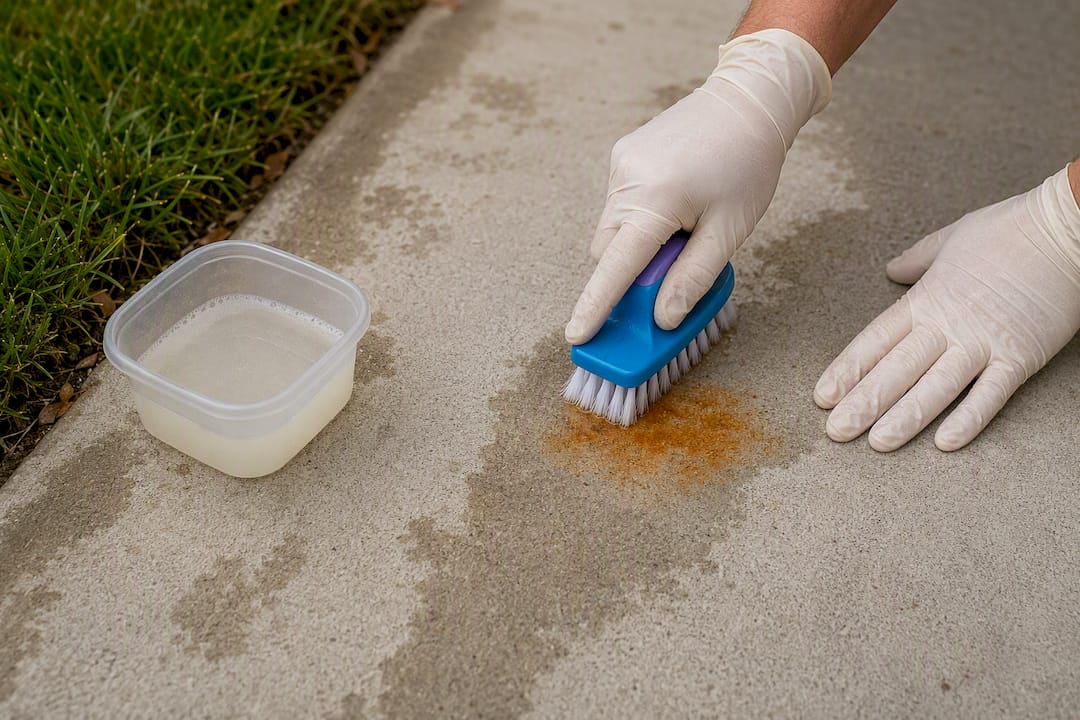
- Scrub with dish soap and warm water using a stiff nylon brush, working in small circles for a minute or two.
- If that doesn’t clear it, apply white vinegar directly to the stain, or make a paste of lemon juice and coarse salt, and spread it evenly across the mark.
- Let it sit for 15 to 30 minutes. Don’t let it dry out completely; keep the area damp if the weather’s hot.
- Agitate again with the nylon brush, then rinse thoroughly with clean water.
- Let the concrete dry fully before deciding whether to repeat, since a lightened stain can look worse when wet than it will once dry.
Pro Tip: Always test any acid or paste on a hidden corner, like a spot under a parked car or behind a bin store, for 24 hours before treating the visible stain. Sealed or coloured concrete can lighten or discolour in ways you won’t want to explain to visitors.
Household remedies genuinely work on fresh, unsealed surfaces, but they generally fail once rust has penetrated deep into the pores, so don’t be discouraged if a stain that’s been there since last winter barely budges.
Step-by-step: escalate to oxalic acid, chelators or a poultice for stubborn stains
Oxalic acid is the standard tool for concrete rust because of how it works chemically: it chelates iron oxides, binding them into water-soluble iron oxalates that rinse away instead of sitting locked in the surface. Not every chelator behaves the same way. Citric and lactic acids are gentler options for delicate finishes, oxalic remains the workhorse for plain concrete, and phosphoric acid converts rust to iron phosphate but risks whitening the surface if you overuse it.
For a set-in stain:
- Dilute the oxalic acid product exactly to the manufacturer’s ratio; stronger isn’t faster, it’s just riskier.
- Apply evenly and check the stain every 10 minutes rather than walking away for an hour.
- Dwell times commonly run from a short time up to several hours for deeply set stains, so patience matters more than concentration.
- For stains that seem to run through the slab rather than sitting on top, build a poultice: mix the chelator with an absorbent powder like diatomaceous earth into a thick paste, spread it an eighth of an inch thick, cover with plastic to slow drying, and leave it overnight to draw the rust out as it dries.
- Once you’re satisfied, neutralise the residue with a baking soda and water solution, then rinse thoroughly and direct the runoff away from drains and beds.
If the stain keeps reappearing in the exact same spot after a proper chelator treatment, that’s usually not a cleaning problem. It’s often a sign of corroding rebar or wire mesh beneath the surface, and no amount of surface chelation will fix rust bound into the concrete matrix itself at that point.
Pressure-washing: how to use it safely and what it can’t do
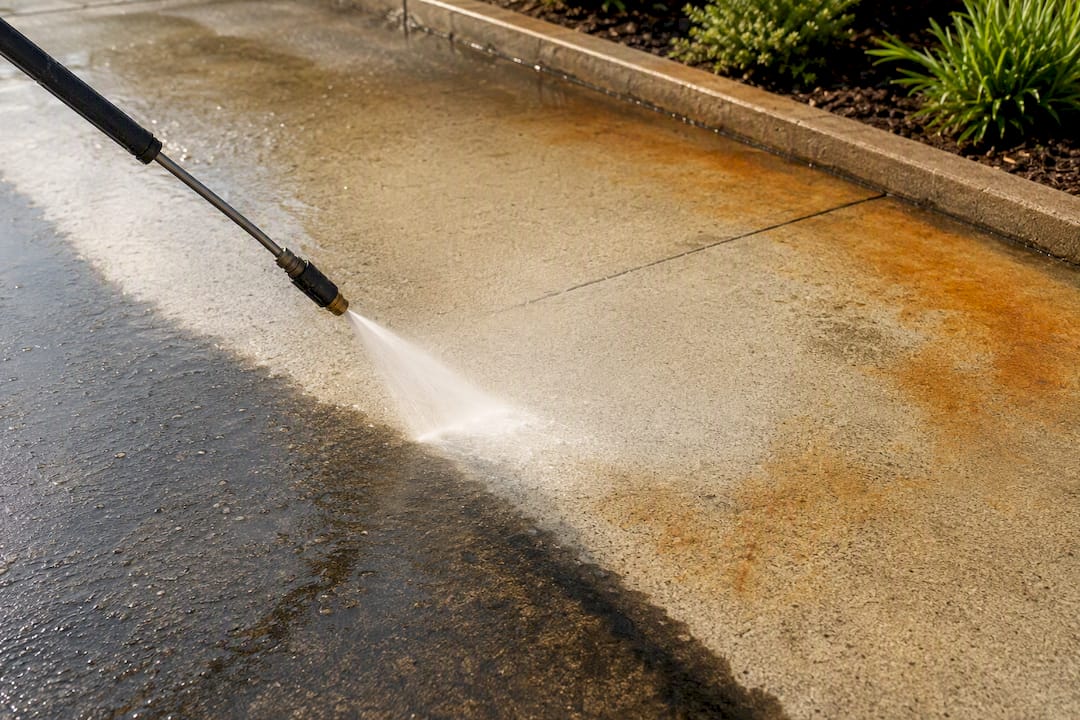
Pressure washing is a rinsing and finishing step, not a chemical solution. Pressure alone can’t reach iron that’s bound inside the pores, and cranking the PSI up to compensate usually just damages the slab instead of clearing the stain.
Keep to these limits:
- Use low-to-moderate pressure settings, generally in the 1,500 to 3,000 PSI range for driveway concrete, rather than commercial-grade equipment built for industrial surfaces.
- Keep the nozzle at least six inches from the surface at all times.
- Choose a wide fan-spray tip over a narrow, concentrated one.
- Never fixate a jet on one spot trying to “blast out” a stain. That’s how you etch a permanent ring into the concrete.
- If mechanical scrubbing and chemical treatment both fail, light grinding of the surface layer is the genuine last resort, and it’s a job best left to someone with the right equipment.
Safety, testing and environmental precautions
Treat rust removal chemicals with the same respect you’d give any acid in the shed. Wear gloves, eye protection, and an apron as standard, and add a respirator if you’re working somewhere with poor ventilation or generating dust from a poultice powder.
- Always test a hidden area first and give it a full day before judging the result.
- Cover or move nearby plants; acidic runoff will scorch foliage and alter soil pH.
- Direct rinse water away from storm drains and gutters rather than letting it wash straight off the property.
- Never mix cleaning products together, and always neutralise acid residue with a baking soda solution before your final rinse.
Pro Tip: Keep a bag of plain baking soda by the hose. If you spill concentrated acid solution anywhere you didn’t intend, a quick dusting neutralises it before it can etch or spread further.
Prevention and follow-up: sealing and source control to stop recurrences
Fixing the stain without fixing the cause just buys you a rematch. Irrigation water carrying iron, metal furniture, and fertiliser are the three most common repeat offenders on driveways and patios.
- Fit protective feet under metal furniture and planters, and move tools and equipment off concrete after use rather than leaning them against a wall overnight.
- Reposition sprinklers so they don’t spray directly onto the slab, or treat the water supply if it’s carrying visible iron.
- Reseal the concrete once it’s fully dry and clean; a typical cadence is every one to three years depending on traffic and weather exposure, and a sealed surface makes future spills far easier to wipe up before they set.
- If a stain keeps returning from the same exact patch despite proper cleaning and source control, that pattern points to something structural, worth having inspected rather than treated again.
Professional perspective: when DIY stops being the right call
Household fixes and chelators handle most driveway rust, but there’s a point where DIY starts costing more than it saves. Professional exterior cleaning and pressure washing services use soft-wash techniques that control dwell time precisely across a whole driveway rather than one patch at a time.
That control matters on decorative or sealed finishes, where an uneven DIY pass leaves visible blotching. Professionals also test finishes before committing to a full treatment, protect surrounding landscaping, and collect rinse water rather than letting it run into beds or drains.
If a stain keeps reappearing from the same spot after proper treatment, that’s a signal worth acting on. Spalling, cracking, or rust bleeding from within the slab usually means embedded metal corrosion, and no surface product will resolve that. At that stage, a professional inspection is the sensible next move, not another bottle of acid.
— Michael
Get your driveway properly cleaned and protected
Hiring professional exterior cleaning services is a practical alternative to endless weekend scrubbing: instead of testing patches, mixing chelators, and hoping the weather holds, you can get the whole driveway or patio treated in one visit, with the finish protected rather than risked.

The service list covers exactly what this guide has walked through, done properly and at scale: driveway and patio cleaning, pressure washing, targeted stain removal, and sealing to stop the same marks coming back. Professional exterior cleaning services use specialist equipment and safe, tested procedures, with a reputation built on visible results rather than promises. For anyone weighing up a DIY weekend against getting it done once and done well, the calculation is simple once you’ve seen how quickly acid, pressure, and patience run out on a large area. For deeper cleaning routines and containment tips beyond concrete, the detailed cleaning walkthrough at Jasmindor is worth a look too.
Head to the Fresh Exteriors driveway and patio cleaning page to request a quote or book an inspection, and get a straight answer on what your driveway actually needs.