
Wash the surface first, then work a clay bar or clay mitt over the affected panel. That lifts most bonded overspray without touching the clear coat underneath. Only reach for chemical removers if claying fails, and treat wet sanding or rotary buffing as a last resort best left to someone trained to use them. Every step after the wash gets more aggressive, so test before you escalate.
TL;DR:
- Claying is the safest and most effective method for removing bonded overspray, as it mechanically shears particles without damaging the clear coat.
- Use a sequence of chemical removers starting with dedicated overspray removers and diluted isopropyl alcohol before considering stronger solvents or professional techniques.
- Wet sanding and machine polishing should be avoided unless performed by trained professionals, as they risk removing too much clear coat on thin or previously repainted panels.
- Always test chemical agents on inconspicuous areas and ensure proper preparation, masking, and work in shaded, cool environments to prevent damage.
- For large exterior surfaces like walls and driveways, pressure washing and soft-wash techniques are safer and more effective than traditional chemical or mechanical methods.
Table of Contents
- What tools and prep do you need before you start?
- How do you identify overspray before you treat it?
- How do you clay bar overspray safely?
- Which chemical removers should you try next?
- Do you need to polish or wet sand after removal?
- How do you treat glass, trim and painted walls differently?
- When should you stop and call in a professional?
- What Fresh Exteriors can do about heavy exterior overspray
- Sources
What tools and prep do you need before you start?
Set up a two-bucket wash kit with grit guards and a pH-neutral car soap, then gather a clay bar or synthetic clay mitt with plenty of clay lubricant or quick detailer. You’ll also want:
- Microfibre towels (several, since claying loads them with grime)
- Nitrile gloves and safety glasses
- A single-edge razor blade for glass work only
- A mild automotive solvent for the chemical stage
- Finishing polish plus wax, sealant, or a coating to reapply afterwards
Work in the shade on a cool panel, never in direct sun, and mask off trim, badges, and rubber seals before you touch anything with a solvent.
How do you identify overspray before you treat it?
Not every fleck on your paint is overspray, and treating tar or tree sap like fresh paint wastes time and risks the finish. Run through this before reaching for any product:
- Wash and dry the surface completely so you’re looking at the actual problem, not road film.
- Feel for texture with a plastic bag over your hand, gliding it across the panel. Overspray feels like fine sandpaper; tar feels sticky and uneven; sap feels tacky and often sits in raised, irregular blobs.
- Check the pattern. Overspray tends to land in a directional drift, heavier on horizontal surfaces facing the source. Tar clusters near wheel arches and rocker panels.
- Photograph the damage with a date stamp before you touch it, particularly if you might pursue insurance or contractor liability later.
- Pick an inconspicuous spot, such as inside a door jamb, to test any chemical before it goes near a visible panel.
- Apply a small amount of solvent on a microfibre applicator, wait a few seconds, wipe, then rinse with fresh water and check for dulling or colour transfer.
How do you clay bar overspray safely?
Claying is the workhorse of paint overspray removal and the step most people skip straight past, which is a mistake. It shears bonded particles off the clear coat mechanically, with no chemicals near the paint.
- Wash and dry the whole panel first. Claying over dirt just grinds grit into the surface.
- Work in sections roughly 305mm by 305mm rather than tackling the whole door or bonnet at once.
- Spray a generous amount of clay lubricant onto the section, not the clay itself.
- Glide the clay in straight lines with light pressure, letting the lubricant do the work rather than pressing harder.
- Fold the clay to a clean face every few passes, or knead a fresh section in, once it starts to feel loaded or gritty.
- Rinse the section and towel it dry, then feel it by hand. If it’s still rough, repeat before moving to the next section.
Pro Tip: If you drop the clay on the ground, throw it away. Grit embedded in the clay will scratch the clear coat on the next pass, and you won’t see it happen until the damage is done.
Avoid dry claying, and never substitute dish soap or shampoo for proper clay lubricant. Both starve the clay of slip and turn a safe method into an abrasive one. Direct sunlight causes the same problem, since the lubricant evaporates before you’ve finished the section.
Which chemical removers should you try next?
If claying alone doesn’t fully lift the overspray, move up the ladder rather than jumping straight to something aggressive. A dedicated automotive overspray remover or diluted isopropyl alcohol is the right next step, not a harsh solvent.
The sequence that works, tried in order:
- A dedicated overspray remover, applied per label instructions
- Diluted isopropyl alcohol on a soft applicator
- Mineral spirits or a tar remover, if the first two haven’t shifted it
- Stronger solvents, reserved for trained professionals only
A working method, every time: put a small amount of product on an applicator, let it sit for a short dwell time, wipe gently, and immediately wash the area with fresh water to neutralise any residue. Letting solvent dry on the panel is how a minor job becomes a bigger one. Never jump straight to lacquer thinner or acetone. Both strip clear coat fast and are effectively irreversible in careless hands, which is why OEM technical bulletins treat them as a professional-only tier, not a DIY shortcut. Some guides mention WD-40 for very fresh, light latex overspray, but it’s unreliable on cured paint and leaves an oily film that fights with polish and wax afterwards.
Do you need to polish or wet sand after removal?
Most jobs stop here. A light finishing polish clears any micro-marring left by claying or a chemical wipe, restoring gloss without cutting into the clear coat itself.
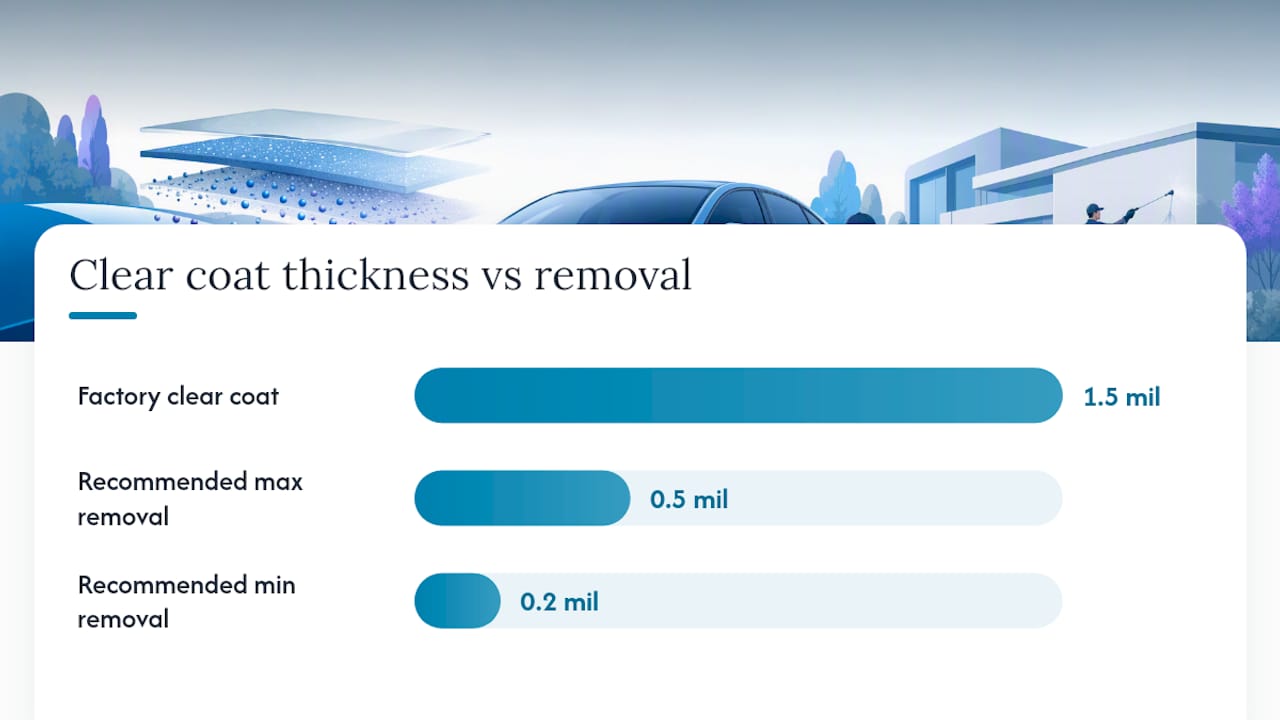
Wet sanding and machine compounding are different: they physically remove material, and factory clear coats are often only around 1.5 mils thick to begin with. Paint-thickness gauge guidance recommends keeping any abrasive correction under roughly 0.2 to 0.5 mils of removal, which leaves almost no margin for error on a panel that’s already thin from a previous repaint.
- Use a dual-action polisher, not a rotary buffer, for any correction work
- Check progress by hand and eye between passes rather than working blind
- Reapply wax, sealant, or a coating immediately once the finish is restored
How do you treat glass, trim and painted walls differently?
Glass, plastic, and household paint each punish the wrong technique in their own way.
- Glass: hold a fresh, lubricated single-edge razor blade flat and at a low angle, moving in one direction only. Never use this method on plastic or tinted surfaces.
- Textured plastic and trim: skip the clay and the razor entirely. Claying is ineffective on heavily textured trim, so use a mild solvent with a soft brush and neutralise with water straight away.
- Painted walls and porous substrates: always test first, choose the mildest method available, and hand large areas to a professional rather than working panel by panel with automotive products.
If you’re dealing with overspray on interior doors or trim rather than a vehicle, this guide to painting interior doors is a useful companion for getting the surrounding finish right once the overspray is gone.
When should you stop and call in a professional?
The real risk in DIY overspray removal isn’t the first wash or the clay bar. It’s the point where someone reaches for a rotary buffer or wet sanding block without knowing how much clear coat they’ve got left to work with. I-CAR’s guidance for technicians is explicit that these methods can permanently damage paint when used incorrectly, and a dual-action polisher in untrained hands isn’t automatically safer.
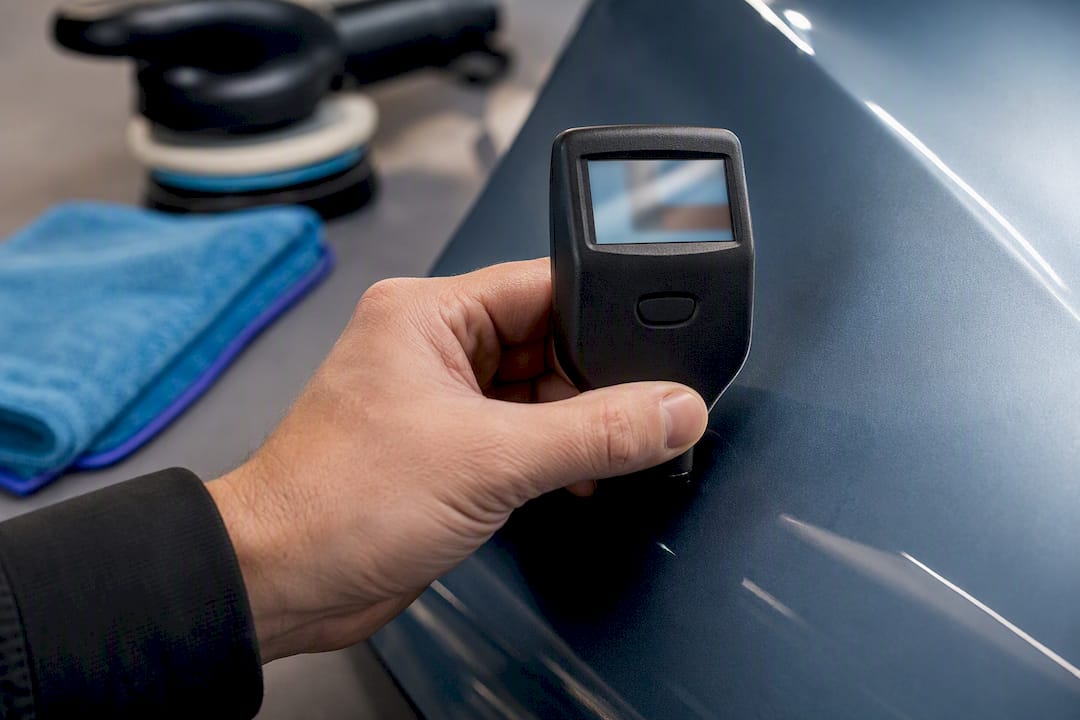
Professionals bring a paint-thickness gauge, so they know the safe margin before they start rather than guessing. They also use calibrated polishers, controlled wet-sanding technique, and produce documentation that insurers and contractors will actually accept if you’re pursuing a claim. If your test spot dulls, discolours, or feels different under a fingernail after a chemical wipe, that’s the moment to stop and get a second opinion rather than push through to a bigger solvent.
What Fresh Exteriors can do about heavy exterior overspray
The methods above work well for a car bonnet or a single door panel. They don’t scale to a render wall, a block-paved driveway, or a car park hit by overspray from a nearby respray job. For that kind of large-area contamination on hard landscaping and building exteriors, soft-wash and pressure-washing techniques are safer routes since they lift bonded paint from masonry, brick, and render without the scrubbing that damages mortar joints or textured coatings.

Some exterior cleaning companies treat driveways, patios, render, cladding, and other hard exterior surfaces where paint overspray has landed from nearby building or vehicle work. A typical visit starts with an assessment of the surface and the contamination, followed by the appropriate cleaning methods for that material, with pricing agreed before any work begins. If overspray has hit your driveway, patio, or building exterior and a garden hose isn’t touching it, book a survey through Fresh Exteriors and get a straight assessment of what it will take to shift it.