
For most roofs, yes, pressure washing can cause real damage, and asphalt shingles are the material most at risk. High-pressure water strips protective granules, forces moisture under laps, and can crack tiles or slate outright. The industry standard is a soft wash, a low-pressure chemical treatment that the Asphalt Roofing Manufacturers Association recommends over any mechanical blast. If you’re unsure what your roof can take, get a professional inspection before anyone climbs up with a jet washer.
TL;DR:
- Pressure washing can strip protective granules from asphalt shingles, accelerating roof aging and potentially voiding warranties if done improperly.
- Older roofs over 15 to 20 years are more brittle and should be cleaned with gentle methods regardless of material, especially if fixings are loosening.
- The risks largely depend on application technique, nozzle type, spray angle, and distance, not just pressure level, making soft washing the safer standard.
- Professional soft washing involves inspection, chemical treatment, and low-pressure rinsing, reducing the likelihood of damage compared to DIY pressure washing.
- Damage signs such as granule loss, dislodged tiles, or moisture stains may appear weeks after cleaning, and prompt repairs are crucial to prevent long-term deterioration.
Table of Contents
- What damage pressure washing can cause
- How different roof materials respond to pressure
- Why PSI alone doesn’t tell you if a roof clean is safe
- Soft washing: the safer way to clean a roof, step by step
- When to hire a professional and what to ask them
- Roof cleaning costs and how often you actually need it
- The long-term cost of getting it wrong
- Signs your roof may have been damaged by pressure washing
- What to do if pressure washing has damaged your roof
- A specialist view from Fresh Exteriors
- How Fresh Exteriors handles safe roof cleaning
- Sources
What damage pressure washing can cause
A high-pressure jet does its job too well. It strips away the outer layer of your roof along with the moss, and on some materials that outer layer is the only thing standing between your rafters and a leak.
The damage tends to fall into a few recognisable patterns:
- Granule loss on asphalt shingles. You’ll often spot this as fine, sandy grit collecting in your gutters after a clean.
- Cracked or dislodged tiles and slate. Concentrated water pressure can chip edges or pop tiles clean off their battens.
- Water forced under laps. Jets driven upward or at close range push moisture beneath the overlapping courses, where it has nowhere to evaporate.
- Disturbed ridge mortar and flashing. Bedding around ridges and valleys can loosen, letting water find new routes inside.
- Collateral damage to gutters and beds. Dislodged granules and debris clog downpipes and settle on the plants below.
Pro Tip: Check your gutters and downpipes a few days after any roof clean. A build-up of gritty, sand-like debris is one of the clearest early signs that granules have been stripped rather than washed off.
Manufacturers focus heavily on granule loss for good reason: those granules block UV rays and shed water. Once they’re gone, ageing accelerates, and BobVila’s roofing guidance notes that improper cleaning methods can void portions of a manufacturer’s warranty entirely.
How different roof materials respond to pressure
Not every roof reacts the same way, and the “should you pressure wash a roof” question really has a different answer depending on what’s over your head.
- Asphalt shingles. ARMA advises against pressure washing outright, because the force strips the mineral coating that protects the shingle mat underneath. That damage doesn’t show up as a leak next week; it shows up as a roof that needs replacing years earlier than it should.
- Slate and clay tiles. Both are brittle. A direct jet can crack, chip, or lift tiles from their fixings, and once one tile fails, water tracks sideways under its neighbours.
- Wood shakes. Wood absorbs water readily, and forcing pressurised jets across the grain can splinter or lift shakes that already have decades of weathering behind them.
- Metal roofing. The most pressure-tolerant option, but only with controlled technique. Wrong angle or nozzle choice still damages seams and coatings.
Pro Tip: A roof over 15 to 20 years old is more brittle across almost every material category. Age alone is often reason enough to choose the gentlest method available, regardless of what the roof is made from.
Condition matters as much as material. A newer slate roof with tight, well seated tiles tolerates far more than one where fixings have already loosened with age.
Why PSI alone doesn’t tell you if a roof clean is safe
The number on a pressure washer’s dial matters less than how that pressure gets applied. Nozzle type, spray angle, and distance from the roof surface all change the outcome dramatically, and roof cleaning guidance generally treats anything above 100 PSI on shingles as a risk threshold worth avoiding.
Spray aimed upward or held too close lifts shingle edges and drives water straight under the laps, which is exactly where you don’t want moisture sitting. That same jet abrades the granule coating, and Hardshore Exteriors’ analysis of pressure washing on shingles points out that the roof can look genuinely clean immediately afterwards, even while the damage that causes a leak eighteen months later is already done.
A few checks after any clean help catch problems early:
- Look for granules collecting in gutters over the following weeks.
- Check the ceiling below flat or low-pitch sections for new damp patches.
- Look along ridge lines for mortar that’s chipped, loose, or missing.
Soft washing: the safer way to clean a roof, step by step
Soft washing swaps mechanical force for chemistry, and it’s the method most manufacturers and trade bodies actually endorse.
- Inspect first. Walk the roof line, or have a professional do it, and note any already-loose tiles, cracked ridge mortar, or brittle shingles before applying anything.
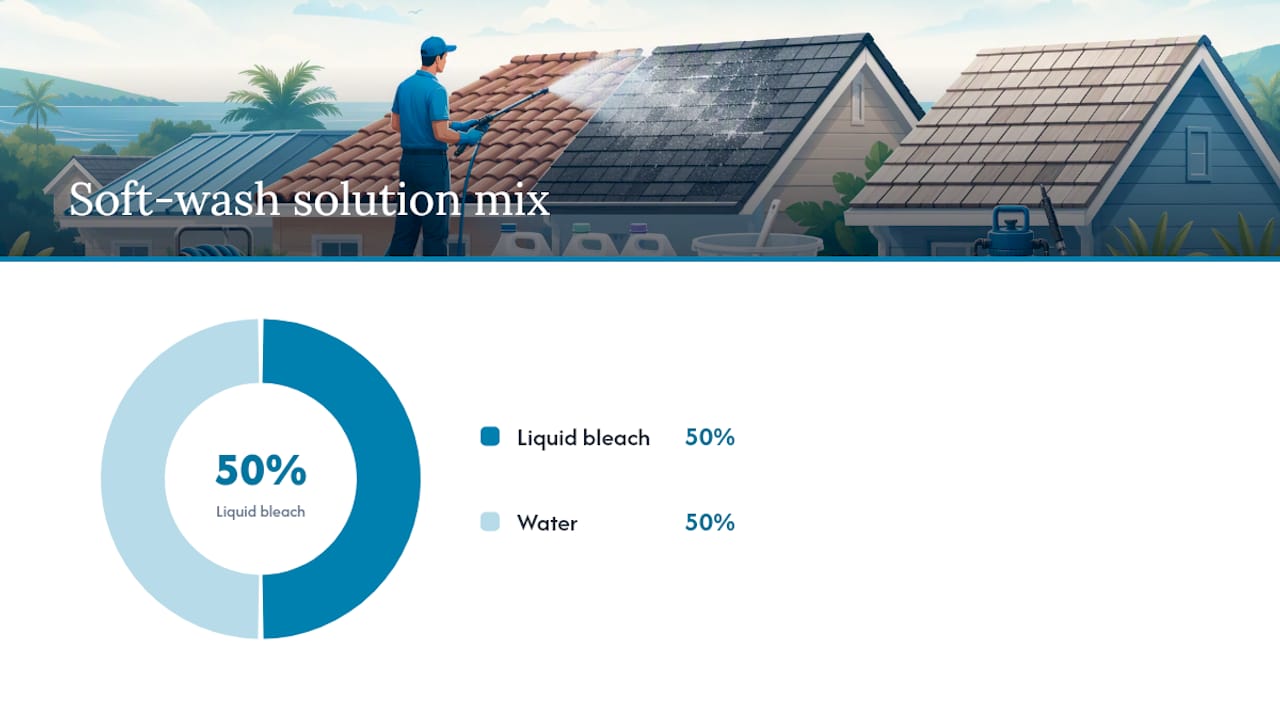
- Mix the solution. ARMA’s guidance for asphalt shingles specifies a 50:50 mix of laundry-strength liquid chlorine bleach and water, applied with a low-pressure sprayer rather than a pressure washer nozzle.
- Let it dwell. Give the solution 15 to 20 minutes of contact time so it can actually kill the algae and moss rather than just rinsing it around.
- Rinse at low pressure. A gentle rinse, not a jet wash, clears residue without disturbing granules or lifting shingle edges.
- Protect what’s below. Cover or pre-wet plant beds and contain runoff so bleach solution doesn’t scorch landscaping or run into drains untreated.
- Reassess after a few weeks. Moss can take time to fully loosen and wash away in subsequent rain, so don’t judge the result on day one.
Pro Tip: Metal roofs are the one category where a controlled mechanical wash sometimes makes sense, but even then it needs a wide fan nozzle, moderate distance, and a downward spray angle, never a tight jet aimed up under the seams.
DIY soft washing is possible, but chemical handling, ladder safety, and containment add up fast. A trained contractor with the right dilution ratios and containment gear often costs less overall than a DIY mistake that turns into a repair bill.
When to hire a professional and what to ask them
Get quotes in writing, and don’t accept a vague description of “roof cleaning” without specifics.
Ask every contractor:
- What method will you use on my specific roof material, and what’s your maximum PSI limit in writing?
- What chemicals are you using, what’s the dwell time, and how do you contain runoff?
- How will you protect my plants, guttering, and any solar panels or skylights?
- Are you insured, and can you show before-and-after evidence from similar roofs?
- Will this method affect my roofing manufacturer’s warranty?
Watch for red flags:
- Anyone promising instant, flawless results with no mention of technique.
- A refusal to explain their method or chemical mix when asked directly.
- No insurance documentation or references you can actually check.
The NFRC has publicly warned against pressure washing roofs except in tightly controlled circumstances, and a contractor who bristles at that guidance rather than engaging with it is worth avoiding. For general seasonal upkeep between professional cleans, these end-of-summer roof maintenance tips cover the basics worth checking yourself.
Roof cleaning costs and how often you actually need it
Price depends on roof size, pitch, material, and how heavy the moss or algae growth is. In the US, HomeAdvisor’s cost data puts the average roof clean around $461, with a typical moderate price range, and notes that careful low-pressure work often costs more than a rushed high-pressure job, precisely because it takes longer to do properly.
| Factor | Effect on price |
|---|---|
| Roof size | Larger roofs mean more labour and material |
| Pitch/steepness | Steep roofs need extra safety measures, raising cost |
| Material | Delicate materials (slate, wood) need slower, costlier methods |
| Growth severity | Heavy moss needs longer dwell time and possibly repeat visits |
Most roofs need cleaning every few years on a regular schedule, and staying on that schedule is usually cheaper long term than letting growth build up and needing a heavier treatment later. Don’t expect a finished look on day one either; algae often continues washing away with subsequent rain over the following weeks. Gutter clearing and a moss-inhibiting treatment are worth adding to the same visit, since both extend the gap before you need another clean.
The long-term cost of getting it wrong
Roof damage from pressure washing rarely announces itself immediately, and that’s what makes it dangerous. A shingle stripped of granules doesn’t leak the next day. It ages faster under UV exposure, and the failure shows up as a leak two or three years down the line, long after anyone would think to connect it back to a cleaning job.
Water forced under laps behaves the same way. It sits against underlayment and decking, and rot develops quietly in a space you can’t see without pulling shingles up. By the time a stain appears on a bedroom ceiling, the moisture has usually been working away for months.
The financial consequence is straightforward: a roof that should have lasted another decade instead needs a full or partial re-roof, and that cost dwarfs anything saved by choosing a cheap pressure wash over a proper soft wash. Insurers, too, sometimes push back on claims where the cause of damage traces to inappropriate cleaning rather than normal wear, which leaves the homeowner covering the repair alone.
Signs your roof may have been damaged by pressure washing
Some damage is obvious the day it happens. A cracked tile or a mortar joint knocked loose during the clean is visible from the ground with a pair of binoculars. Other damage takes weeks to surface, which is why a single post-clean inspection isn’t always enough.
Watch for these over the following month:
- Granules collecting in gutters or at the base of downpipes, well after the clean is finished.
- Damp patches or discolouration on ceilings, particularly under valleys or low-pitch sections.
- A musty smell in the loft, which often signals trapped moisture before any visible staining appears.
- Tiles or shingles that look slightly lifted or out of alignment compared with before the clean.
- Missing or crumbling mortar around ridge tiles and chimney flashing.
If you notice any of these, don’t wait for the next heavy rain to see what happens. Get on the roof, or have someone qualified do it, and trace the issue back before it spreads to decking or insulation.
What to do if pressure washing has damaged your roof
Act on the timeline the damage demands, not on convenience. A cracked tile or lifted flashing needs attention within days, because every rain event afterwards pushes more water into the gap. A patch of stripped granules is less urgent in the moment, but it still shortens the shingle’s working life, so it belongs on your repair list even without an active leak.
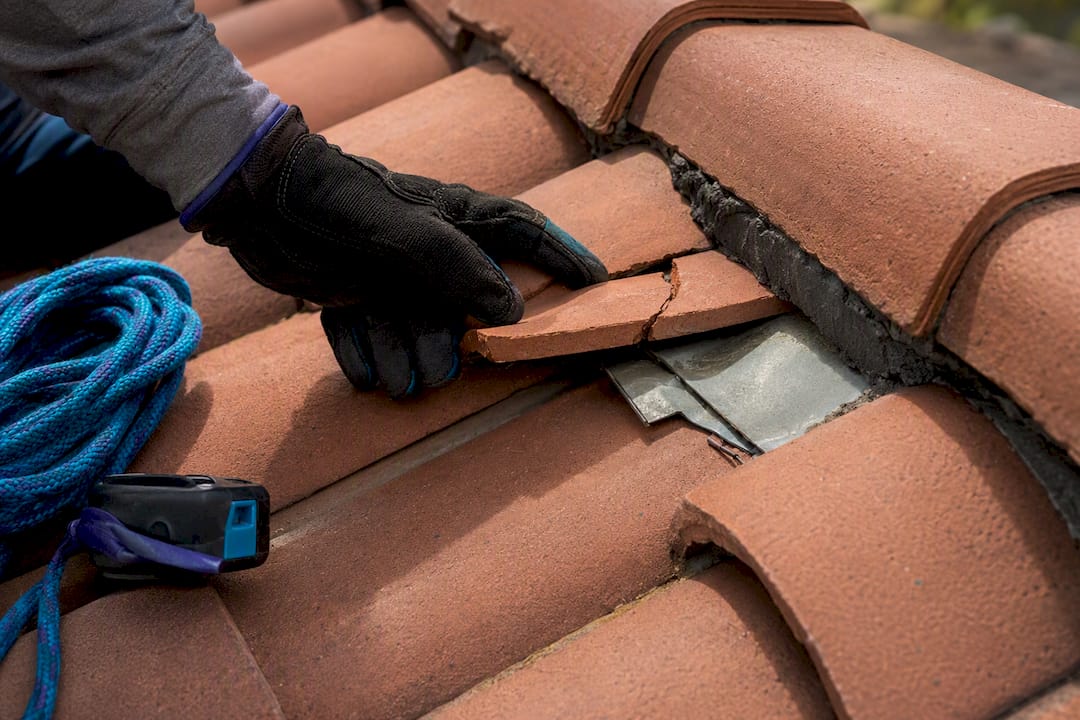
Start with a proper inspection, ideally from a roofer rather than the same contractor who did the cleaning, since you want an independent read on what happened. Photograph everything: cracked tiles, gutter debris, ceiling stains, and the date they appeared relative to the cleaning job. That record matters if you end up disputing the bill or making an insurance enquiry.
For isolated damage, individual tile or shingle replacement is usually fast and inexpensive. Where flashing or ridge mortar has failed, a roofer will re-bed or reseal those sections rather than replacing the whole roof. If water has already tracked into the loft, check insulation and timber for damp before it turns into rot; catching it early usually means drying out the area rather than replacing structure.
Keep the contractor’s quote, their written method statement if you got one, and your before-and-after photos together. If a warranty was in play, contact the shingle or tile manufacturer directly, since some warranty claims require notification within a set window of discovering the damage.
A specialist view from Fresh Exteriors
We inspect before we clean, every time. That sounds obvious, but it’s the step most price-driven jobs skip, and it’s the step that tells you whether a roof can take a soft wash at all or whether it needs repair first. Our preference is soft washing as the default for pitched and shingled roofs, with containment and plant protection built into the quote rather than treated as an optional extra.
The straightforward advice we’d give any homeowner: choose safety over speed. A roof that looks clean in an afternoon but loses years of life isn’t a good trade. If a method sounds too aggressive for your roof type, it probably is.
— Michael
How Fresh Exteriors handles safe roof cleaning
Professional roof cleaning services offer tailored soft washing matched to your specific roof material, moss and algae treatment where needed, and plant protection included as standard. Pricing is typically transparent from the quote stage, so you know what you’re paying for before any work begins.

If your roof has visible moss, algae staining, or you’re simply unsure whether it can safely handle any cleaning method, get an inspection booked before deciding on treatment. You can request a quote through Fresh Exteriors and get a method suited to your roof, not a one-size-fits-all blast that risks the years you’ve got left on it.
Sources
- Algae & moss prevention and cleaning for asphalt roofing systems – Asphalt Roofing Manufacturers Association (ARMA)
- Roof cleaning cost guide – HomeAdvisor
- Pressure washing asphalt shingles: what it does to the roof – Hardshore Exteriors
- Why, when, and how experts say you should clean your roof – BobVila